Why Pottery Helped People Store Food
Clay jars made daily life safer and calmer.
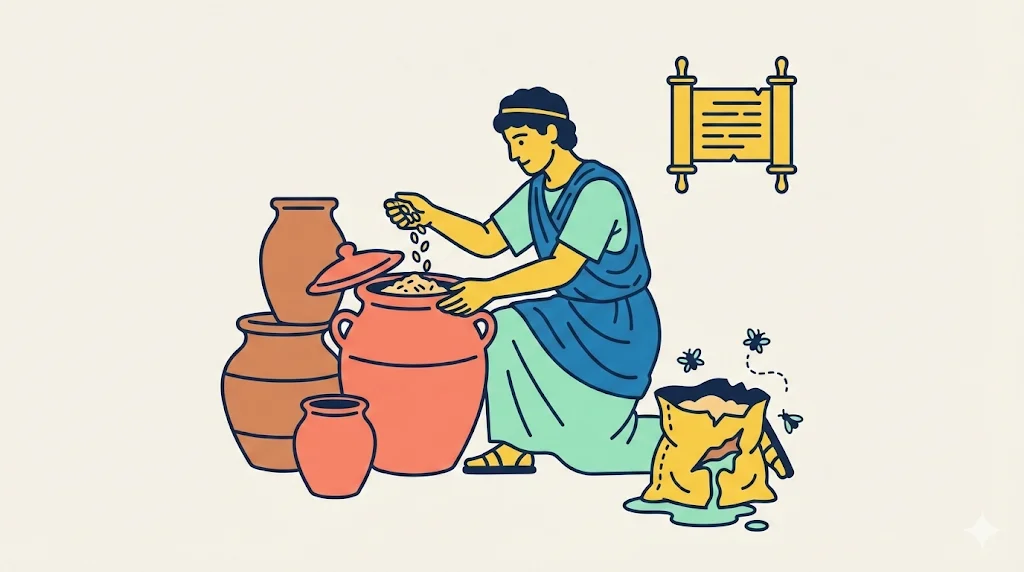
Alex moves into a new home. He buys rice and dried beans. He puts them in a thin bag. After a few days, he opens the bag. Small insects are inside. The food smells bad. Alex feels upset. “Why is this happening?” he thinks.
He visits his neighbor. The neighbor smiles and shows him clay jars. The jars are hard and heavy. Many have lids. “Put your food in here,” the neighbor says.
Long ago, many people learned the same lesson. Baskets and skins can leak. They can get wet. Animals can bite them. But fired clay is strong. A clay pot can keep grain, oil, and dried food safer. It helps block moisture. It also helps stop spills. And it can protect food from small animals.
Pottery also helped people plan. If you can store food well, you can save seed for next planting. You can share food with a sick neighbor. You can keep extra food for hard times, like a dry season or a cold season.
Pottery changed community life too. People cooked in pots. They carried food to trade. Some people became skilled pot makers. They shaped clay, fired pots, and sometimes decorated them. A simple jar helped a whole community feel more steady.
Key Points
- Pots keep food dry and safer from animals and spills.
- Pots help people plan and build steady community life.
Words to Know
jar /dʒɑːr/ (n) — a container, often with a lid
clay /kleɪ/ (n) — soft earth used to make pots
fire /ˈfaɪər/ (v) — to heat strongly to make hard
moisture /ˈmɔɪs.tʃər/ (n) — wetness in the air or on things
seed /siːd/ (n) — a small part that can grow into a plant
trade /treɪd/ (n, v) — exchange goods with others
spill /spɪl/ (v) — to drop liquid or food by accident
skill /skɪl/ (n) — an ability you learn with practice