Wisdom English Learn about the world. Grow your English.
Mind & Habits

Why Multitasking Makes You Slower

A1 A2 B1 B2

Multitasking feels productive, but it often means switching attention again and again. This article shows why switches slow you down—and how simple focus habits can help.

A1 Level

Two tasks become many small switches.

Multitasking Feels Fast, but It Makes You Slow

Two tasks become many small switches.

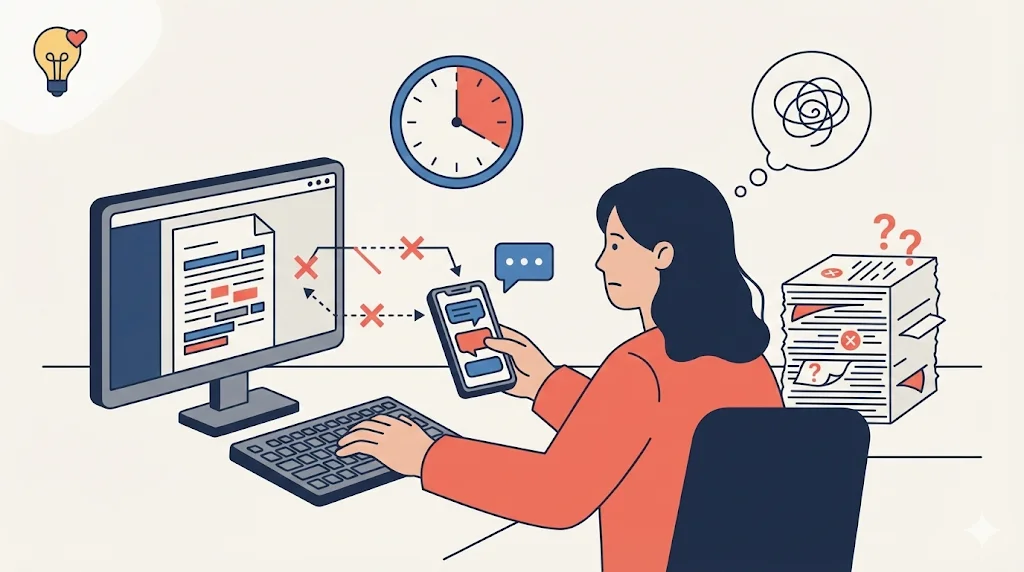
Jamie sits at her desk. She writes a report. A chat message pops up. She answers. Then she goes back to the report. Another message comes. She answers again.

After two hours, Jamie feels tired. The report has repeated sentences. Some numbers are missing. Jamie asks, “Why did I work for so long, but finish so little?”

Here is the reason: “multitasking” is often not doing two things at once. It is switching fast. Your brain jumps from the report to the chat, then back again. It feels busy, so it feels productive. But focus breaks each time.

Each switch also has a small “restart cost.” When Jamie returns to the report, she must remember: “Where was I? What number did I use?” She checks again. She rereads. That takes time.

One helpful habit is to work on one track at a time. Jamie can turn off chat for 15 minutes. Then she can write only the report. After that, she can check messages together. This is called batching.

Multitasking can feel like speed. But calm focus often finishes the job faster—and with fewer mistakes.


Key Points

  • Multitasking is often fast switching that breaks focus.
  • Switching has a restart cost, so one-track work is faster.

Words to Know

multitasking /ˌmʌltiˈtæskɪŋ/ (n) — trying to do many tasks at once
switch /swɪtʃ/ (v) — to change from one thing to another
focus /ˈfoʊkəs/ (n) — full attention on one thing
message /ˈmesɪdʒ/ (n) — a short text someone sends
mistake /mɪˈsteɪk/ (n) — something wrong you do
cost /kɔːst/ (n) — something you lose (time, energy)
check /tʃek/ (v) — to look again to make sure
batch /bætʃ/ (v) — to do similar small tasks together


📝 Practice Questions

A1 – True/False

  1. Multitasking often means switching between tasks.
  2. Switching attention can cause mistakes.
  3. Batching means checking messages every second.

A1 – Multiple Choice

  1. What happens when Jamie “multitasks”?
    A. She switches between report and messages
    B. She finishes in ten minutes
    C. She sleeps at her desk

  2. What is a “restart cost”?
    A. A free gift
    B. Time to remember where you were
    C. A new computer

  3. Which habit helps one-track work?
    A. Open more tabs
    B. Answer every message instantly
    C. Check messages together in a batch

A1 – Short Answer

  1. What is Jamie writing?
  2. What is missing in the report?
  3. Name one way to reduce interruptions.

A1 – True/False

  1. True
  2. True
  3. False

A1 – Multiple Choice

  1. A
  2. B
  3. C

A1 – Short Answer

  1. A report
  2. Numbers
  3. Turn off chat / silence alerts / close extra tabs (any one)
A2 Level

It’s usually switching, not true “two-at-once” work.

The Hidden Cost of Multitasking

It’s usually switching, not true “two-at-once” work.

Jamie tries to finish a report before dinner. She also keeps chat open for her team. Every few minutes, a message appears. Jamie answers quickly, then returns to the report.

Two hours later, the report looks messy. A sentence repeats. A number is missing. Jamie feels confused. “I was busy the whole time,” she thinks. “So why am I behind?”

What multitasking really is

Most “multitasking” is fast switching between tasks—messages, tabs, people, and small requests. It feels productive because you are always moving. But your focus breaks each time you switch. Your brain must re-build the “map” of what you were doing.

Why switching slows you down

Each switch has a restart cost. When Jamie returns to the report, she needs a moment to remember the plan, the last paragraph, and the next step. That moment can become longer when switches happen again and again. Also, small details are easier to forget, so you do more re-checking. You may also make more mistakes, which creates even more fixing later.

One track at a time

Jamie can use simple boundaries. She can write in a short focus block (for example, 15–25 minutes) with chat closed. Then she can check messages in one batch. She can also reduce interruptions by setting a status like “I’m writing—back in 20 minutes.”

Multitasking is not a personal failure. It is a normal brain limit. When you respect that limit, work often becomes calmer, faster, and cleaner.


Key Points

  • Multitasking is usually quick switching that breaks focus.
  • Each switch has a restart cost: time loss, detail loss, more re-checking.
  • Use one-track habits: batch small tasks, short focus blocks, simple boundaries.

Words to Know

attention /əˈtenʃən/ (n) — where your mind points
interrupt /ˌɪntəˈrʌpt/ (v) — to stop someone’s work for a moment
boundary /ˈbaʊndəri/ (n) — a clear limit you set
restart /ˌriːˈstɑːrt/ (n) — starting again after stopping
detail /ˈdiːteɪl/ (n) — a small important part
productive /prəˈdʌktɪv/ (adj) — making good results
status /ˈsteɪtəs/ (n) — a short message showing what you are doing
block /blɑːk/ (n) — a set period of time for one task
batch /bætʃ/ (v) — to group similar tasks and do them together
mistake /mɪˈsteɪk/ (n) — an error


📝 Practice Questions

A2 – True/False

  1. Multitasking is often fast switching between tasks.
  2. Switching can make you forget details and re-check more.
  3. A focus block means doing many tasks at the same time.

A2 – Multiple Choice

  1. What is “multitasking” in this article?
    A. Cooking while sleeping
    B. Quick switching between tasks
    C. One long break

  2. Why does switching slow you down?
    A. Each switch has a restart cost
    B. Switching makes time disappear
    C. Switching gives you more focus

  3. What is an example of batching?
    A. Replying to messages at set times
    B. Reading one sentence and stopping
    C. Keeping chat open all day

A2 – Short Answer

  1. What problem appears in Jamie’s report?
  2. Why do people re-check more after switching?
  3. Write one simple boundary Jamie can use.

A2 – True/False

  1. True
  2. True
  3. False

A2 – Multiple Choice

  1. B
  2. A
  3. A

A2 – Short Answer

  1. Repeated sentence / missing number
  2. They forget details and need to confirm again
  3. “Back in 20 minutes” / close chat during focus (any one)
B1 Level

Busy is not the same as focused.

Task Switching: The Real Reason Multitasking Slows You Down

Busy is not the same as focused.

Jamie opens her laptop with a clear plan: finish the report, then relax. But her team chat is active. A message arrives, then another. She answers quickly, trying to be helpful. She returns to the report, then switches again.

By late afternoon, Jamie feels like she ran all day but moved nowhere. The report has repeated lines and missing numbers. She also feels slightly stressed, as if her mind is still “half in chat.”

Multitasking is often switching

For many people, multitasking means jumping between tasks: a document, a chat window, an email, a quick call, a new tab. It can feel productive because you touch many things. But each touch breaks the flow of deep focus. Your brain must keep changing goals: “Now write,” “Now reply,” “Now remember what you wrote.”

The restart cost

Every switch creates a restart cost. You lose a little time to re-enter the task. You may forget what you decided two minutes ago. You may reread old lines to find your place. When this happens many times, it adds up. It can also increase mistakes, because your working memory is full of half-finished thoughts. Then you spend even more time checking, correcting, and explaining.

One-track habits that help

You do not need a perfect life to focus. You need simple systems.

  • Batch small tasks: reply to messages at set times, not every minute.
  • Use short focus blocks: 20–30 minutes on one task, then a short check-in.
  • Reduce interruptions: close extra tabs, silence non-urgent alerts, and tell people when you will respond.

At the end of the day, focus is not about being “strong.” It is about designing your day so your brain can stay on one track long enough to do good work.


Key Points

  • Multitasking usually means quick task switching that breaks focus.
  • Switching has a restart cost: lost time, lost details, more re-checking.
  • One-track habits help: batching, short focus blocks, and fewer interruptions.

Words to Know

task-switching /ˈtæsk ˌswɪtʃɪŋ/ (n) — moving attention between tasks
flow /floʊ/ (n) — smooth focused work with few breaks
working memory /ˈwɜːrkɪŋ ˈmeməri/ (n) — the mind’s “small space” for now
alert /əˈlɜːrt/ (n) — a notification that pulls attention
urgent /ˈɜːrdʒənt/ (adj) — needing attention right now
system /ˈsɪstəm/ (n) — a repeatable method that helps you act
re-check /ˌriːˈtʃek/ (v) — to check again for accuracy
accuracy /ˈækjərəsi/ (n) — being correct
boundary /ˈbaʊndəri/ (n) — a limit that protects your time
batching /ˈbætʃɪŋ/ (n) — grouping similar tasks together
distract /dɪˈstrækt/ (v) — to pull attention away
reset /ˌriːˈset/ (v) — to start again with fresh focus


📝 Practice Questions

B1 – True/False

  1. Task switching can break deep focus even if you feel busy.
  2. Restart cost can include time loss and more mistakes.
  3. The article says you must ignore all messages for a whole day.

B1 – Multiple Choice

  1. What is the main meaning of multitasking here?
    A. Doing two hard jobs perfectly at once
    B. Working slower on purpose
    C. Jumping between tasks and goals

  2. What is one result of restart cost?
    A. You always remember everything
    B. You reread to find your place
    C. You become faster with each switch

  3. Which option best supports one-track work?
    A. Use short focus blocks
    B. Keep every alert on
    C. Add more quick tasks

B1 – Short Answer

  1. Why can switching increase mistakes?
  2. Give one example of batching small tasks.
  3. What does “flow” mean in the article?

B1 – True/False

  1. True
  2. True
  3. False

B1 – Multiple Choice

  1. C
  2. B
  3. A

B1 – Short Answer

  1. Working memory gets crowded; details are easier to miss
  2. Reply to messages at set times
  3. Smooth focused work with few breaks
B2 Level

The problem isn’t effort. It’s constant context switching.

Why “Multitasking” Is Mostly Self-Inflicted Drag

The problem isn’t effort. It’s constant context switching.

Jamie’s afternoon looks impressive from the outside. Her cursor never stops moving. A report is open. Chat messages keep arriving. She answers fast, adds a line to the report, then answers again. She feels responsible and active.

But when she finally scrolls through the report, something feels wrong. The structure is uneven. A paragraph repeats an idea she already wrote. A key number is missing. Jamie did a lot of work—and still has a lot left.

Multitasking is a story we tell ourselves

In many modern jobs, “multitasking” sounds like a strength. Yet most of the time, it is not two skills running in parallel. It is rapid switching: document → chat → email → meeting note → back to document. The brain must keep changing its “current goal,” and that change breaks the sense of depth. You may feel busy and important, but your attention becomes thin.

The restart cost you don’t see

Each switch carries a restart cost (sometimes called a re-entry cost). You spend time getting back into the thread: What was my argument? Which number did I choose? What did I promise the team? This cost is not only time. It is also quality. When you re-enter quickly, you may miss small details, so you re-check more. Your working memory becomes crowded with unfinished pieces, which makes errors more likely. Then you pay again—through correction, apology, and extra meetings to “align.”

The trap is emotional, too. Fast switching can give a short feeling of progress: you clear a message, you close a tab. But the deeper task (writing, planning, learning) needs uninterrupted attention to move forward.

One-track design: practical, not extreme

The solution is not to disappear offline forever. It is to design your day with one track at a time.

  • Batch small tasks: group messages and emails into a few check windows.
  • Use short focus blocks: protect 25–45 minutes for one task, then take a brief reset.
  • Reduce interruptions with simple boundaries: silence non-urgent alerts, keep one “main tab,” and communicate response times (for example, “I check chat at :00 and :30”).

When Jamie tries this, she may reply a bit later—but she writes a cleaner report faster. The surprising lesson is gentle: focus is not a personality trait. It is an environment you build, so your brain can do what it does best—one clear thing at a time.


Key Points

  • Multitasking is usually rapid task-switching that feels productive but breaks focus.
  • Switching has a restart cost: time loss, detail loss, and more re-checking.
  • One-track habits help: batching, focus blocks, and simple interruption boundaries.

Words to Know

context /ˈkɑːntekst/ (n) — the situation your brain is working inside
parallel /ˈpærəlel/ (adj) — happening at the same time
thin /θɪn/ (adj) — weak or spread out (about attention)
re-entry /ˌriːˈentri/ (n) — getting back into a task after leaving it
thread /θred/ (n) — the main line of an idea or conversation
quality /ˈkwɑːləti/ (n) — how good or accurate something is
align /əˈlaɪn/ (v) — to agree and match plans with others
progress /ˈprɑːɡres/ (n) — moving forward toward a goal
boundary /ˈbaʊndəri/ (n) — a limit that protects time and focus
window /ˈwɪndoʊ/ (n) — a set time period for an activity
reset /ˌriːˈset/ (n) — a short break that refreshes attention
silence /ˈsaɪləns/ (v) — to stop sounds or alerts
non-urgent /ˌnɑːn ˈɜːrdʒənt/ (adj) — not needed right away
crowded /ˈkraʊdɪd/ (adj) — too full
trait /treɪt/ (n) — a stable personal feature

📝 Practice Questions

B2 – True/False

  1. Constant switching can reduce both speed and quality.
  2. The restart cost is only about time, not accuracy.
  3. Simple boundaries can reduce interruptions without extreme rules.

B2 – Multiple Choice

  1. What does the article suggest about “multitasking”?
    A. It is usually rapid task-switching, not true parallel work
    B. It always improves deep focus
    C. It is the best way to write reports

  2. Which example shows a “simple boundary”?
    A. Reading chat every five seconds
    B. Working with ten alerts on
    C. Telling others you check chat at set times

  3. Why can switching create “extra meetings to align”?
    A. Switching makes people speak faster
    B. Mistakes and confusion require more coordination
    C. Switching removes the need to communicate

B2 – Short Answer

  1. What is one “invisible” cost of switching besides time?
  2. Why can fast switching feel good in the short term?
  3. Describe one one-track plan Jamie could use tomorrow.

B2 – True/False

  1. True
  2. False
  3. True

B2 – Multiple Choice

  1. A
  2. C
  3. B

B2 – Short Answer

  1. Lower quality / more errors / more re-checking (any one)
  2. It gives a quick feeling of progress (clearing messages/tabs)
  3. Example: 45 minutes report, then 10 minutes batch messages; silence non-urgent alerts (any reasonable plan)