Wisdom English Learn about the world. Grow your English.
Health & Body

Why Hydration Affects Every Organ

A1 A2 B1 B2

Water is not just for thirst. It moves blood and nutrients, cools you through sweat, helps digestion, and lets kidneys filter waste. Even mild dehydration can change focus, mood, and energy.

A1 Level

One small drink, many big jobs

Water Helps Every Part of You

One small drink, many big jobs

Sara worked in a small shop. The afternoon was busy. Customers came and went. Sara smiled, but her head felt heavy. Her mouth was dry. She drank coffee in the morning, but she did not drink water.

During a short break, she filled a bottle. She took a few small sips. After a little time, her body felt better.

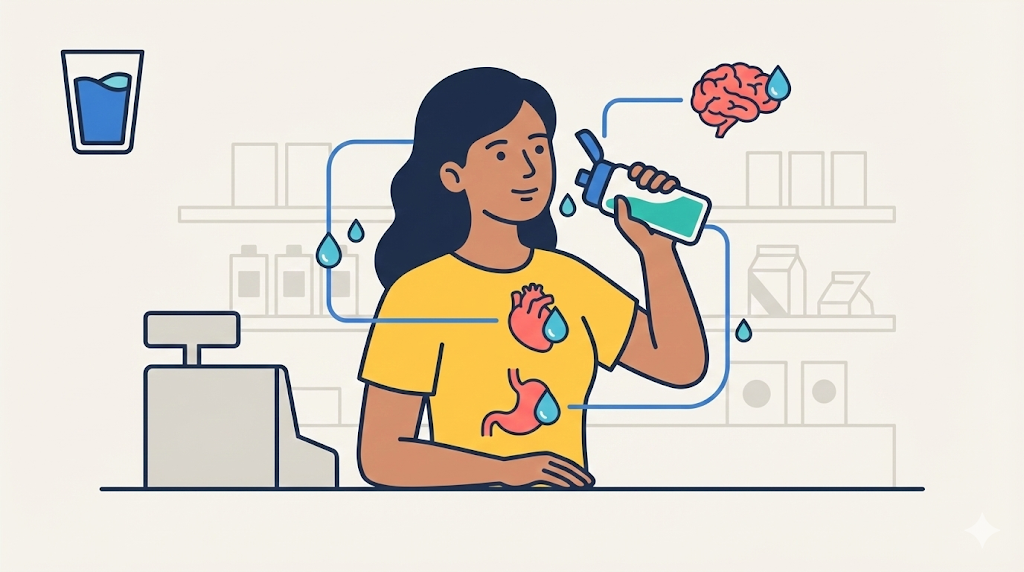
Water helps every organ in your body. Your blood needs water. Blood carries oxygen and food energy to your cells. When you have enough water, your blood moves well. Your heart does not work as hard.

Water also helps your brain. When you are low on water, you can feel tired. You may get a headache. You may feel slow and lose focus.

Water helps your body stay cool, too. On a hot day, you sweat. Sweat uses water to cool your skin. Without enough water, you can overheat more easily.

Water helps your stomach and bathroom habits. It helps food move. It also helps your body make urine to carry waste away.

Sara looked at her bottle. “This is not a health trend,” she thought. “This is basic care.” She took another sip and went back to work, lighter and calmer.


Key Points

  • Water helps your blood, brain, and cooling system work well.
  • Even a little low water can make you tired or give you a headache.

Words to Know

water /ˈwɔːtər/ (n) — the clear drink your body needs
hydration /haɪˈdreɪʃən/ (n) — having enough water in the body
thirsty /ˈθɜːrsti/ (adj) — wanting to drink water
sweat /swet/ (n/v) — wet drops from skin when hot
blood /blʌd/ (n) — the red liquid that moves inside you
brain /breɪn/ (n) — the organ that helps you think
kidney /ˈkɪdni/ (n) — an organ that makes urine and removes waste


📝 Practice Questions

A1 – True/False

  1. Water helps blood move around the body.
  2. Sweat helps cool the body on hot days.
  3. Coffee is the best way to hydrate every organ.

A1 – Multiple Choice

  1. What problem did Sara feel at work?
    A. A sore knee
    B. A small headache
    C. A cold nose

  2. What do kidneys help your body do?
    A. Make bones longer
    B. Make hair grow faster
    C. Make urine and remove waste

  3. On a hot day, the body uses water to make _____.
    A. sand
    B. sweat
    C. smoke

A1 – Short Answer

  1. What drink did Sara forget?
  2. Name one sign of low water.
  3. What helps cool your skin?

A1 – True/False

  1. True
  2. True
  3. False

A1 – Multiple Choice

  1. B
  2. C
  3. B

A1 – Short Answer

  1. Water
  2. Headache / dry mouth / tiredness
  3. Sweat
A2 Level

Hydration is transport, cooling, and daily comfort

Your Body Runs on Water

Hydration is transport, cooling, and daily comfort

Sara sat in the break room and rubbed her forehead. “I feel a little dizzy,” she said.

Leo, her coworker, looked at her bottle. It was still empty. “Did you drink water today?” he asked.

Sara shook her head. “Only coffee.”

Water Moves Things

Leo pointed to her arm. “Your blood is like a delivery road,” he said. “It carries oxygen and nutrients to every organ. Blood needs water to stay smooth and to move well.”

When you do not drink enough, your body can run low quietly. You may feel tired. You may get a headache. Some people feel grumpy or cannot focus well.

Water Cools and Cleans

Leo opened the window a little. The day was warm. “Water also helps you cool down,” he said. “When you sweat, you lose water. Sweat is your body’s cooling system.”

He added, “Water helps the kidneys, too. The kidneys filter waste and make urine. If you are low on water, the urine can look darker.”

Water also supports digestion. It helps food move through the gut. If you drink too little, you may feel constipated. Water even helps joints move smoothly, like oil in a simple machine.

Sara nodded. “That explains my dry mouth,” she said. “But I did not feel very thirsty.”

Leo said, “Thirst can be a late signal, especially when you are busy or older. So it helps to drink a little at regular times.”

Leo smiled. “And food can help. Soup, fruit, and vegetables give water, too.”

Sara filled her bottle and drank slowly. They made a simple rule: one cup of water before lunch, and small sips in the afternoon. Public health guides like the CDC often remind people to drink more in heat or during exercise. It is not about perfect numbers. It is about steady support for your whole body.

Sara stood up. Her head felt clearer. “Okay,” she said. “I will take care of my water—one small sip at a time.”


Key Points

  • Water helps blood carry oxygen and nutrients to organs.
  • Water helps cooling (sweat), kidneys (urine), and digestion.
  • Thirst can be late, so small regular drinks help.

Words to Know

hydration /haɪˈdreɪʃən/ (n) — enough water in the body
dizzy /ˈdɪzi/ (adj) — feeling like you might fall
nutrient /ˈnuːtriənt/ (n) — a helpful part of food for the body
circulation /ˌsɜːrkjəˈleɪʃən/ (n) — blood moving around the body
cool down /kuːl daʊn/ (v) — become less hot
filter /ˈfɪltər/ (v) — remove unwanted things
urine /ˈjʊərɪn/ (n) — liquid waste from the body
constipated /ˈkɒnstɪˌpeɪtɪd/ (adj) — having trouble going to the bathroom
signal /ˈsɪɡnəl/ (n) — a sign that tells you something


📝 Practice Questions

A2 – True/False

  1. Blood needs water to carry oxygen and nutrients well.
  2. Thirst is always an early and clear signal.
  3. Soup and fruit can help with hydration.

A2 – Multiple Choice

  1. What can happen when you drink too little water?
    A. Faster reading speed
    B. Headache and low focus
    C. Stronger night vision

  2. What is one job of sweat?
    A. Growing new teeth
    B. Changing eye color
    C. Cooling the body

  3. What can darker urine suggest?
    A. You may be low on water
    B. You ate too many apples
    C. You slept eight hours

A2 – Short Answer

  1. Why can thirst be late for some people?
  2. Name one water-rich food Leo mentioned.
  3. When might you need more water?

A2 – True/False

  1. True
  2. False
  3. True

A2 – Multiple Choice

  1. B
  2. C
  3. A

A2 – Short Answer

  1. Because busy people may not notice thirst early
  2. Soup / fruit / vegetables
  3. In heat or during exercise
B1 Level

How hydration changes focus, mood, and energy

The 3 p.m. Crash and the Water Fix

How hydration changes focus, mood, and energy

At 3 p.m., Sara always felt sleepy. She worked in a shop with bright lights and warm air. She looked at the clock, then at her third coffee. “Why does my body crash every afternoon?” she wondered.

One week, she decided to test a simple idea: water.

A Small Drop Can Change Your Day

On Monday, Sara drank very little water. She ate a salty snack. By mid-afternoon, her head hurt and her thoughts felt slow. She made small mistakes at the register.

On Tuesday, she tried a different plan. She drank a cup of water with breakfast. She kept a bottle on the counter and took small sips between customers. At lunch, she ate fruit and soup. At 3 p.m., she still felt tired, but the heavy fog did not come.

This is common because your body uses water all day. You lose it when you breathe, when you sweat, and when you go to the bathroom. If you lose more than you replace, your blood volume can drop a little. Then it is harder for the body to move oxygen and nutrients quickly.

Brain, Kidneys, and Heat

Sara noticed another change: her mood. On the “low water” day, she felt more impatient. On the “steady water” day, she felt calmer. Many people report headaches and low focus when they are mildly dehydrated. Health sources like the Mayo Clinic often talk about dehydration signs such as fatigue, headache, and dark urine.

Water also helps the kidneys. Kidneys filter waste and balance salts in the body. When water is low, the kidneys must work harder to concentrate urine. Over time, this can make you feel uncomfortable and sluggish.

Heat makes the problem stronger. In a hot room or during exercise, you sweat more. Sweating cools the body, but it costs water. That is why Sara felt worse on warm days and better when she planned ahead.

The “Small Sips” Habit

Sara learned one key lesson: coffee cannot replace water. Coffee can be part of your day, but your body fluids still need water. She also learned that one big drink at night did not help much. Small, regular drinking worked better.

Now Sara uses easy cues. She drinks water when she starts work. She takes three sips every time she checks the clock. She adds water-rich foods when she can.

She still gets tired sometimes. But she no longer feels confused by it. When her body asks for water, she listens—quietly, kindly, and early.


Key Points

  • Mild dehydration can reduce focus, mood, and energy.
  • Kidneys need water to filter waste and balance salts.
  • Heat and exercise increase water loss through sweat.

Words to Know

volume /ˈvɒljuːm/ (n) — the amount of something
replace /rɪˈpleɪs/ (v) — put back what was lost
fatigue /fəˈtiːɡ/ (n) — strong tiredness
dehydrated /ˌdiːhaɪˈdreɪtɪd/ (adj) — low on body water
impatient /ɪmˈpeɪʃənt/ (adj) — easily annoyed while waiting
concentrate /ˈkɒnsənˌtreɪt/ (v) — keep attention on one thing
balance /ˈbælənս/ (v/n) — keep things even and stable
sluggish /ˈslʌɡɪʃ/ (adj) — slow and low-energy
cue /kjuː/ (n) — a small trigger that reminds you
steady /ˈstedi/ (adj) — stable, not changing fast
sign /saɪn/ (n) — a clue that shows something is happening


📝 Practice Questions

B1 – True/False

  1. Sara felt better when she used small sips across the day.
  2. Heat and exercise can increase water loss through sweat.
  3. The kidneys do not use water when filtering waste.

B1 – Multiple Choice

  1. What changed for Sara on her “steady water” day?
    A. She became hungry only at night
    B. Less heavy fog at 3 p.m.
    C. She stopped needing sleep forever

  2. Why can low water reduce energy?
    A. Eyes stop blinking
    B. Bones become heavier
    C. Blood volume can drop a little

  3. What was Sara’s key habit lesson?
    A. Salt replaces all fluids
    B. One big drink is always best
    C. Coffee cannot replace water

B1 – Short Answer

  1. Describe Sara’s Day B plan in one sentence.
  2. Give two common signs of mild dehydration.
  3. Why do warm days feel harder without enough water?

B1 – True/False

  1. True
  2. True
  3. False

B1 – Multiple Choice

  1. B
  2. C
  3. C

B1 – Short Answer

  1. She drank water early and took small sips all day.
  2. Headache and fatigue / dark urine and low focus
  3. Because you sweat more and lose water faster.
B2 Level

Blood, heat, electrolytes, and modern routines

Why Hydration Feels Like “Everything”

Blood, heat, electrolytes, and modern routines

Sara’s new routine was simple: work, commute, gym. But some evenings, the gym felt strangely hard. Her legs cramped. A headache arrived on the train ride home. She blamed stress, then age, then “bad motivation.”

One day she looked at the pattern. The hardest days were also the hottest days. They were the days with long meetings, a salty lunch, and almost no water until late afternoon. The problem was not willpower. It was fluids.

Water Is the Hidden System Behind Systems

Hydration is not only about thirst. Water is part of blood and other body fluids. Those fluids move oxygen, glucose, and minerals to cells. They also carry waste away. When you run a little low, the body has to protect the most urgent tasks first. You may still “function,” but you can feel less sharp.

A small drop in fluid can reduce blood volume. Then the heart may beat faster to keep circulation steady. The brain can react quickly, too. Mild dehydration is often linked with headaches, low attention, and slower reaction time.

Hydration also supports digestion. Water helps the gut move food forward and keep stool soft. If you sit many hours and drink little, constipation becomes more likely. Even joints and eyes can feel drier when the body is low on water.

Heat, Sweat, and Electrolytes

Sweat is a smart cooling tool. But sweat is also a loss. When you sweat, you lose water and electrolytes like sodium and potassium. Electrolytes help nerves and muscles work. If you replace only water after heavy sweating, you might still feel weak. If you replace only salty snacks, you might feel thirsty and puffy. Balance matters.

That is why needs change. A person walking in a cool office may need less than a person working outdoors, commuting in summer, or doing a hard workout. Public health groups like the WHO and the CDC often warn that heat and exercise raise dehydration risk. The message is not “drink a huge amount.” The message is “pay attention and replace what you lose.”

Modern Life Makes Quiet Dehydration Easy

In many places, modern routines push water to the side. We rush to catch buses. We sit in long meetings. We avoid drinking because we do not want bathroom breaks. Air-conditioned rooms can dry the air. Processed foods can add extra salt. All of this can raise the chance of mild dehydration without loud alarms.

Sara built a system instead of relying on memory:

  • Water with breakfast, before coffee.
  • A bottle on the desk, not in a bag.
  • A drink before the gym, and another after.
  • Water-rich foods (soup, fruit, yogurt, vegetables) on busy days.
  • Simple signals: dry mouth, dark urine, headache, sudden fatigue.

She also kept a gentle caution in mind. Some medical conditions and some medicines change fluid needs, so personal advice can matter.

After a few weeks, Sara did not feel “superhuman.” She felt steady. Hydration became like charging a phone: small, regular, and quiet. And when the body is supported by the simplest resource, every organ can do its job with less strain.


Key Points

  • Hydration supports circulation, brain function, digestion, and waste removal.
  • Heat and sweat increase water loss and change electrolyte needs.
  • Simple routines beat “remembering,” especially in modern busy life.

Words to Know

fluid /ˈfluːɪd/ (n) — liquid in the body
circulation /ˌsɜːrkjəˈleɪʃən/ (n) — blood flow around the body
mineral /ˈmɪnərəl/ (n) — a natural substance the body needs in small amounts
electrolyte /ɪˈlektraʊlaɪt/ (n) — a salt that helps nerves and muscles work
sodium /ˈsoʊdiəm/ (n) — salt mineral found in food and sweat
potassium /pəˈtæsiəm/ (n) — mineral that supports muscles and the heart
cramp /kræmp/ (n) — sudden painful muscle tightness
constipation /ˌkɒnstɪˈpeɪʃən/ (n) — difficulty passing stool
process /ˈprɑːses/ (v) — handle and change something (like food or waste)
strain /streɪn/ (n) — extra stress or pressure on the body
routine /ruːˈtiːn/ (n) — a repeated daily pattern
replace /rɪˈpleɪs/ (v) — put back what was lost
signal /ˈsɪɡnəl/ (n) — an early sign that tells you something

📝 Practice Questions

B2 – True/False

  1. Mild dehydration can affect attention and reaction time.
  2. Sweat can cause loss of both water and electrolytes.
  3. Air-conditioned rooms always prevent dehydration risk.

B2 – Multiple Choice

  1. Why might the heart beat faster when fluids are low?
    A. To grow stronger nails
    B. To keep circulation steady
    C. To cool the skin directly

  2. Why can replacing only salty snacks be a problem after sweating?
    A. You may feel thirsty and puffy
    B. It always improves sleep quality
    C. It removes all body heat

  3. Which routine is most like Sara’s “system”?
    A. Avoid water to skip bathroom breaks
    B. Drink only at midnight
    C. Water with breakfast and before the gym

B2 – Short Answer

  1. Explain why modern routines can cause “quiet dehydration” (10–20 words).
  2. Name two electrolytes mentioned and what they help with (10–20 words).
  3. What is one hydration signal you want to notice earlier in your own day?

B2 – True/False

  1. True
  2. True
  3. False

B2 – Multiple Choice

  1. B
  2. A
  3. C

B2 – Short Answer

  1. Meetings, commuting, and dry offices delay drinking, so water loss quietly builds.
  2. Sodium and potassium help nerves and muscles work, especially after sweating.
  3. Example answer: I want to notice a headache earlier, before I feel exhausted.