Why Hydration Feels Like “Everything”
Blood, heat, electrolytes, and modern routines
Sara’s new routine was simple: work, commute, gym. But some evenings, the gym felt strangely hard. Her legs cramped. A headache arrived on the train ride home. She blamed stress, then age, then “bad motivation.”
One day she looked at the pattern. The hardest days were also the hottest days. They were the days with long meetings, a salty lunch, and almost no water until late afternoon. The problem was not willpower. It was fluids.
Water Is the Hidden System Behind Systems
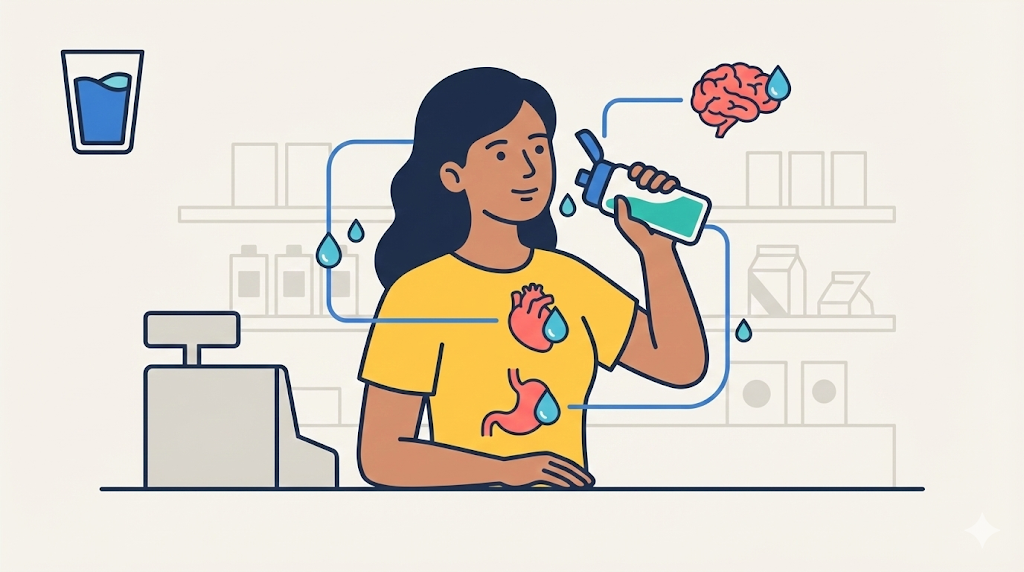
Hydration is not only about thirst. Water is part of blood and other body fluids. Those fluids move oxygen, glucose, and minerals to cells. They also carry waste away. When you run a little low, the body has to protect the most urgent tasks first. You may still “function,” but you can feel less sharp.
A small drop in fluid can reduce blood volume. Then the heart may beat faster to keep circulation steady. The brain can react quickly, too. Mild dehydration is often linked with headaches, low attention, and slower reaction time.
Hydration also supports digestion. Water helps the gut move food forward and keep stool soft. If you sit many hours and drink little, constipation becomes more likely. Even joints and eyes can feel drier when the body is low on water.
Heat, Sweat, and Electrolytes
Sweat is a smart cooling tool. But sweat is also a loss. When you sweat, you lose water and electrolytes like sodium and potassium. Electrolytes help nerves and muscles work. If you replace only water after heavy sweating, you might still feel weak. If you replace only salty snacks, you might feel thirsty and puffy. Balance matters.
That is why needs change. A person walking in a cool office may need less than a person working outdoors, commuting in summer, or doing a hard workout. Public health groups like the WHO and the CDC often warn that heat and exercise raise dehydration risk. The message is not “drink a huge amount.” The message is “pay attention and replace what you lose.”
Modern Life Makes Quiet Dehydration Easy
In many places, modern routines push water to the side. We rush to catch buses. We sit in long meetings. We avoid drinking because we do not want bathroom breaks. Air-conditioned rooms can dry the air. Processed foods can add extra salt. All of this can raise the chance of mild dehydration without loud alarms.
Sara built a system instead of relying on memory:
- Water with breakfast, before coffee.
- A bottle on the desk, not in a bag.
- A drink before the gym, and another after.
- Water-rich foods (soup, fruit, yogurt, vegetables) on busy days.
- Simple signals: dry mouth, dark urine, headache, sudden fatigue.
She also kept a gentle caution in mind. Some medical conditions and some medicines change fluid needs, so personal advice can matter.
After a few weeks, Sara did not feel “superhuman.” She felt steady. Hydration became like charging a phone: small, regular, and quiet. And when the body is supported by the simplest resource, every organ can do its job with less strain.
Key Points
- Hydration supports circulation, brain function, digestion, and waste removal.
- Heat and sweat increase water loss and change electrolyte needs.
- Simple routines beat “remembering,” especially in modern busy life.
Words to Know
fluid /ˈfluːɪd/ (n) — liquid in the body
circulation /ˌsɜːrkjəˈleɪʃən/ (n) — blood flow around the body
mineral /ˈmɪnərəl/ (n) — a natural substance the body needs in small amounts
electrolyte /ɪˈlektraʊlaɪt/ (n) — a salt that helps nerves and muscles work
sodium /ˈsoʊdiəm/ (n) — salt mineral found in food and sweat
potassium /pəˈtæsiəm/ (n) — mineral that supports muscles and the heart
cramp /kræmp/ (n) — sudden painful muscle tightness
constipation /ˌkɒnstɪˈpeɪʃən/ (n) — difficulty passing stool
process /ˈprɑːses/ (v) — handle and change something (like food or waste)
strain /streɪn/ (n) — extra stress or pressure on the body
routine /ruːˈtiːn/ (n) — a repeated daily pattern
replace /rɪˈpleɪs/ (v) — put back what was lost
signal /ˈsɪɡnəl/ (n) — an early sign that tells you something