Wisdom English Learn about the world. Grow your English.
History & Civilization

Why Agriculture Built the First Civilizations

A1 A2 B1 B2

When people learned to farm, they could store extra grain, stay in one place, and grow towns into cities. Surplus food supported new jobs, trade, and leaders—early steps toward civilization.

A1 Level

From seeds to safe homes

Why Agriculture Built the First Civilizations

From seeds to safe homes

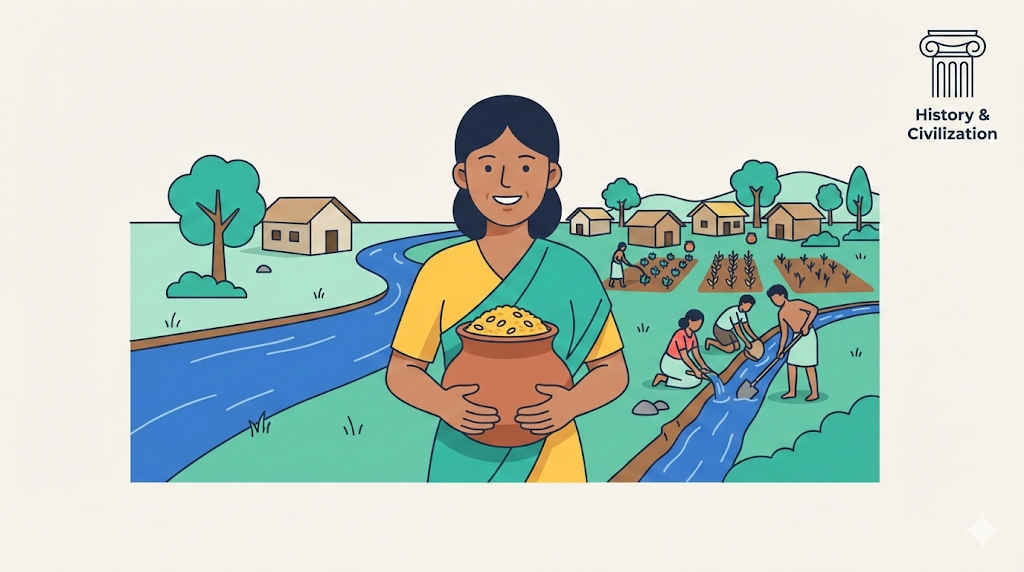
Mina stands by a wide river. The soil is dark and soft. Her family has walked far this season. Hunting is hard now. Some days, they find little food.

One morning, Mina puts a few seeds into the ground. She waters them with river water. Weeks later, green plants rise. Later, the plants give grain. Mina fills a clay pot with dry grain. For the first time, her family can save food for later.

When people farm, they do not need to move every week. They can stay near their fields. They build small homes. Other families stay too. A village grows.

Farming can also make “extra” food. This extra food is called a surplus. With surplus food, more children can grow up in one place. More people can live together. People can help each other. They can share work, like digging a small water channel or fixing a roof.

When many people live close, they need rules. They need someone to plan work and keep peace. Over time, villages can become towns. Towns can become cities. That is one big reason early civilizations began.

At night, Mina looks at the full clay pot. She feels safer. Food in storage is like hope for tomorrow.


Key Points

  • Farming helps people stay in one place and grow villages.
  • Extra food (surplus) helps towns and rules begin.

Words to Know

farm /fɑːrm/ (v) — grow food plants
harvest /ˈhɑːr.vəst/ (n) — time to collect crops
grain /ɡreɪn/ (n) — small dry seed food
store /stɔːr/ (v) — keep for later
village /ˈvɪl.ɪdʒ/ (n) — small group of homes
surplus /ˈsɜːr.pləs/ (n) — extra more than needed
leader /ˈliː.dər/ (n) — person who guides a group


📝 Practice Questions

A1 – True/False

  1. Farming helps people stay in one place.
  2. A surplus means there is no extra food to save.
  3. Villages can grow into towns and cities.

A1 – Multiple Choice

  1. Where did Mina store the grain?
    A. In a clay pot
    B. In a river
    C. In a bag of leaves

  2. Farming can make food more _____.
    A. steady
    B. noisy
    C. expensive

  3. When many people live close together, they need _____.
    A. wild animals
    B. rules
    C. empty fields

A1 – Short Answer

  1. What did Mina plant?
  2. What is extra food called?
  3. Mina’s village is near what?

A1 – True/False

  1. True
  2. False
  3. True

A1 – Multiple Choice

  1. A
  2. A
  3. B

A1 – Short Answer

  1. seeds
  2. a surplus
  3. a river
A2 Level

When extra food becomes a new kind of life

Why Agriculture Built the First Civilizations

When extra food becomes a new kind of life

A small village sits near a river. The river brings water and fish, but the most important thing is the soil. People plant seeds and wait. When the harvest is good, baskets of grain pile up.

Extra Food Changes Everything

Farming can create surplus—more food than a family needs right away. Grain can be dried and stored in jars or a simple storehouse. This is like ancient savings. It helps during winter, drought, or sickness. It also lets the village feed guests, workers, or travelers who arrive later.

From Village to Town

With stored food, the village can grow. Some people can stop farming full-time. One person makes pots for storage. Another makes tools. Another watches animals. A leader organizes shared work, like digging channels to move water to fields. If many hands work together, the fields can become larger and safer.

When trade starts, a visitor might bring salt, cloth, or hard stone and exchange it for grain. To keep things fair, people may begin to count. They may make simple marks on clay or wood to remember who gave what. They may also set rules: “This field is for this family,” or “This water time is for that field.”

More people and more goods bring new problems too. A bad year can cause hunger. Crowded living can spread sickness. Land can become something people fight over. So the village may build fences or walls, and it may choose helpers to protect the place.

Today, big organizations like the UN and the World Bank often talk about how food security supports stable communities. Long ago, the same idea worked in a simpler way: steady food helped people stay, grow, and plan.

In the evening, the villagers close the storehouse door. The grain inside is not only food. It is the start of a larger life together.


Key Points

  • Surplus food can be stored and shared later, like savings.
  • Storage, trade, and rules help villages grow into towns.
  • Growth also brings risks, so people build protection and plans.

Words to Know

surplus /ˈsɜːr.pləs/ (n) — extra more than needed
storehouse /ˈstɔːr.haʊs/ (n) — place to keep stored food
drought /draʊt/ (n) — long time with little rain
irrigation /ˌɪr.ɪˈɡeɪ.ʃən/ (n) — moving water to fields
trade /treɪd/ (n) — exchange goods
record /ˈrek.ərd/ (n) — written or marked memory
property /ˈprɑː.pɚ.ti/ (n) — something a person “owns”
rule /ruːl/ (n) — agreed way to act
fence /fens/ (n) — barrier for protection


📝 Practice Questions

A2 – True/False

  1. Stored grain can work like ancient savings.
  2. Trade starts only after writing is invented.
  3. Crowded living can spread sickness.

A2 – Multiple Choice

  1. Why did the village need a storehouse?
    A. To hide tools from traders
    B. To keep grain for later
    C. To make the river deeper

  2. What is one shared work example in the article?
    A. Digging channels to move water
    B. Painting the sky blue
    C. Building a spaceship

  3. Which organizations are mentioned as modern examples?
    A. WHO and NASA
    B. MIT and UNESCO
    C. the UN and the World Bank

A2 – Short Answer

  1. Name one thing traded for grain.
  2. Why did people make simple counting marks?
  3. What can happen in a bad year?

A2 – True/False

  1. True
  2. False
  3. True

A2 – Multiple Choice

  1. B
  2. A
  3. C

A2 – Short Answer

  1. salt / cloth / stone
  2. to remember who gave what
  3. hunger (food shortage)
B1 Level

How food surplus turned into towns, jobs, and power

Why Agriculture Built the First Civilizations

How food surplus turned into towns, jobs, and power

The town gate opens at sunrise. A farmer pushes a cart of grain. Near the wall, guards watch the road. In the market, a toolmaker holds up a new sickle. The farmer smiles. After a good harvest, the town feels busy and full of energy.

Surplus Creates New Jobs

Hunting and gathering can feed small groups, but it is hard to store food and plan far ahead. People must follow animals and seasonal plants. Farming changes that. When fields produce surplus, the town can feed people who do not farm every day. Some become builders. Some become potters. Some become soldiers or priests. Specialization makes life more complex—but also more productive, because skilled workers improve their tools and methods over time.

Systems Grow Around Food

Surplus food needs management. Grain must be stored, protected from pests, and shared during hard times. Leaders may collect a portion of grain to support public work. In many early river valleys—the Nile, the Tigris–Euphrates, the Indus, and the Yellow River—people dug canals and controlled water through irrigation. That work required planning, teamwork, and rules about who gets water first.

As towns grow, leaders also need information. They may count jars of grain and track who contributed. They may measure fields and set boundaries. Over time, simple records can become early writing. Museums like the Smithsonian show how daily needs—food, taxes, and trade—pushed societies to invent new tools and new ways to remember.

Surplus also changes power. If some families control more land, they can collect more grain. Some people may become rich owners, while others work the fields. This can create social classes. It can also create laws, because people want to protect property and settle arguments.

Safety, Health, and Conflict

More food can mean more people, and more people can mean new risks. Crowded living can spread disease faster than in small moving groups. Stored grain can attract rats and insects. Towns also create valuable targets. If a place has grain, others may want it. So many towns built walls, organized guards, and made stronger leaders to settle disputes about land and harvests.

UNESCO often explains that early cities were not only places to live, but systems to organize work, belief, and protection. Agriculture did not “magically” create civilization overnight. But it made settled life possible. When you can store grain, you can plan, trade, and build. The farmer leaves the market with a better tool. The town grows a little stronger—one harvest at a time.


Key Points

  • Surplus food supports specialization and new jobs in towns.
  • Managing grain and water leads to rules, leaders, and records.
  • Settled life brings protection needs, health risks, and conflicts over land.

Words to Know

specialization /ˌspeʃ.ə.ləˈzeɪ.ʃən/ (n) — doing one job skillfully
irrigation /ˌɪr.ɪˈɡeɪ.ʃən/ (n) — moving water to fields
canal /kəˈnæl/ (n) — man-made water channel
tax /tæks/ (n) — collected share to support public needs
record /ˈrek.ərd/ (n) — counted or written information
boundary /ˈbaʊn.dər.i/ (n) — line that marks land limits
property /ˈprɑː.pɚ.ti/ (n) — owned land or goods
class /klæs/ (n) — social group with different power or wealth
dispute /dɪˈspjuːt/ (n) — argument or conflict
pest /pest/ (n) — animal/insect that harms crops or storage
disease /dɪˈziːz/ (n) — sickness that spreads


📝 Practice Questions

B1 – True/False

  1. Specialization means everyone farms full-time.
  2. Irrigation needs planning and rules.
  3. Towns built walls partly to protect grain.

B1 – Multiple Choice

  1. Which pair was listed as early river valleys?
    A. the Nile and the Indus
    B. the Amazon and the Mississippi
    C. the Thames and the Rhine

  2. What might leaders collect to support public work?
    A. only fish
    B. a portion of grain
    C. only flowers

  3. In the article, surplus can change _____.
    A. the color of the river
    B. the length of the day
    C. power and social classes

B1 – Short Answer

  1. Give one reason towns needed records.
  2. Name one problem stored grain can attract.
  3. How can surplus help create social classes?

B1 – True/False

  1. False
  2. True
  3. True

B1 – Multiple Choice

  1. A
  2. B
  3. C

B1 – Short Answer

  1. to track grain, taxes, and trade
  2. rats / insects / pests
  3. land owners collect more grain and gain power
B2 Level

Surplus food, stored power, and the trade-offs of settled life

Why Agriculture Built the First Civilizations

Surplus food, stored power, and the trade-offs of settled life

The river is low this year. In a busy river-valley city, the council meets in a shaded room. A farmer speaks first. “If the water comes late,” she says, “my field fails. If my field fails, my family fails.” Outside, workers wait for orders: who will repair the canal, who will guard the storehouse, and who will receive grain if the harvest is poor?

This scene captures a deep truth: civilization is not only stone buildings. It is a system for managing food, water, people, and power.

Surplus Becomes Institutions

Agriculture can produce a surplus—more food than is needed right away. Surplus changes time. When grain can be stored, a city can plan across seasons. It can feed builders during construction. It can support scribes who keep records. It can pay soldiers who defend the walls.

Over time, “managing surplus” becomes an institution. Storage needs rules. Irrigation needs schedules. Taxes appear as a practical tool: a portion of grain is collected to fund shared work. Bureaucracy grows because someone must count, measure, and decide. In this sense, surplus does not just fill stomachs. It builds administration.

Land, Class, and the Price of Stability

Settled farming also changes who owns what. Land becomes property, and property becomes a source of status. If one group controls the best fields or the water gates, inequality can widen. Some people become owners, officials, or merchants. Others become laborers tied to land, debt, or obligation.

Health can also shift. Dense settlements bring disease risk. Close contact with domesticated animals can spread new infections. Diet can narrow when people rely heavily on one staple crop. The city may feel safer than a wandering life, yet it can be fragile. A flood, drought, or pest outbreak can cause famine.

Modern readers may recognize this “trade-off logic.” Analysts at the OECD often discuss how stable food systems support complex economies, but also how shocks—climate, conflict, supply chains—can threaten stability. The basic pattern is ancient: food security supports order, and food insecurity tests it.

Networks, Power, and Long-Term Change

Once farming towns grow, they rarely stay isolated. Surplus invites trade. Grain can be exchanged for metals, timber, salt, or cloth. Trade networks spread ideas, tools, and beliefs. They also spread rivalry. A city with full granaries can fund armies, build monuments, and claim authority.

Researchers writing in journals like Science and Nature often describe early agriculture as a turning point in human history because it reshaped landscapes and social organization for thousands of years. That long view helps us avoid a simple story of “progress.” Agriculture enabled writing, mathematics, and engineering. It also helped create war over fields, heavier labor, and deeper social hierarchy.

Back in the council room, the decision is concrete. Water will go first to the oldest canal section, because it serves the most fields. Grain will be released to families with small children. A scribe will mark each jar. These choices look ordinary, but they are the heart of civilization: turning food into coordination.

Agriculture did not automatically create the first civilizations, but it made large, settled life possible. When people could store food, they could also store power—through land, rules, and records. Civilization begins as a hope for safety, and it grows into a world of systems: helpful, impressive, and sometimes unfair.


Key Points

  • Surplus food supports institutions like storage rules, taxes, and bureaucracy.
  • Settled farming can increase stability, but also inequality and disease risk.
  • Trade networks grow from surplus and can spread both ideas and conflict.

Words to Know

institution /ˌɪn.stɪˈtuː.ʃən/ (n) — organized system in society
bureaucracy /bjʊˈrɑː.krə.si/ (n) — administration with rules and offices
inequality /ˌɪn.ɪˈkwɑː.lə.ti/ (n) — unfair difference in wealth or power
obligation /ˌɑː.bləˈɡeɪ.ʃən/ (n) — duty you must do
hierarchy /ˈhaɪə.rɑːr.ki/ (n) — ranked levels of power
granary /ˈɡræn.ər.i/ (n) — building for storing grain
staple /ˈsteɪ.pəl/ (n) — main food eaten often
famine /ˈfæm.ɪn/ (n) — extreme hunger from food shortage
rivalry /ˈraɪ.vəl.ri/ (n) — competition between groups
coordination /koʊˌɔːr.dəˈneɪ.ʃən/ (n) — organizing people to act together
domesticate /dəˈmes.tɪ.keɪt/ (v) — raise plants/animals under human control
supply chain /səˈplaɪ tʃeɪn/ (n) — path from production to delivery
shock /ʃɑːk/ (n) — sudden damaging change
landscape /ˈlænd.skeɪp/ (n) — land and environment of a region

📝 Practice Questions

B2 – True/False

  1. The article says civilization is only stone buildings.
  2. Stored food can also mean stored power through rules and records.
  3. Trade networks can spread rivalry as well as ideas.

B2 – Multiple Choice

  1. In the B2 article, “managing surplus” becomes a(n) _____.
    A. institution
    B. holiday
    C. accident

  2. Which modern organization is mentioned?
    A. NASA
    B. OECD
    C. MIT

  3. Which journals are named as places that discuss early agriculture?
    A. Foreign Affairs and The Economist
    B. Nature and UNESCO reports
    C. Science and Nature

B2 – Short Answer

  1. Explain one trade-off of settled farming life.
  2. What would you store to feel safer in hard times?
  3. Why can surplus support scribes and record-keepers?

B2 – True/False

  1. False
  2. True
  3. True

B2 – Multiple Choice

  1. A
  2. B
  3. C

B2 – Short Answer

  1. Example: more stability, but more disease risk and land conflict
  2. Answers will vary
  3. because stored grain can feed them while they keep records