Wisdom English Learn about the world. Grow your English.
Great Lives

What Jane Goodall Learned From Chimpanzees

A1 A2 B1 B2

By watching longer, noticing individuals, and changing her mind with evidence, Jane Goodall transformed how we understand chimpanzees and ourselves.

A1 Level

Learning by waiting and looking

Jane Goodall and Watching Carefully

Learning by waiting and looking

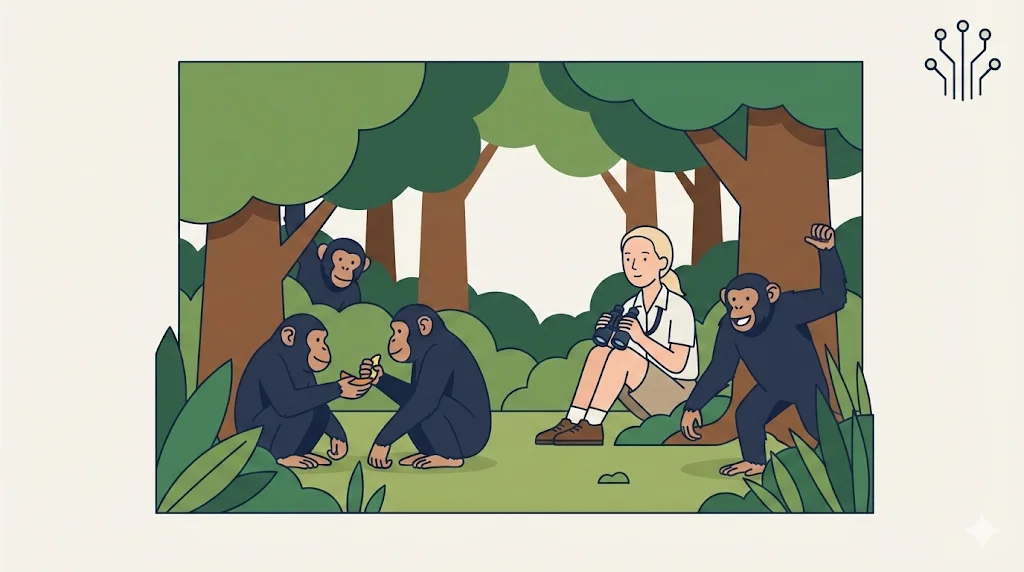
In a forest clearing, a young woman sits very still. Hours pass. Nothing seems to happen. She waits and watches. This woman is Jane Goodall.

Many people had strong ideas about animals. They thought animals were simple. Jane did not rush to judge. She stayed longer than her first idea. Over time, patterns appeared. Small actions began to connect.

Jane noticed individual chimpanzees. She saw that each one was different. One was gentle. Another was bold. By naming them, she avoided “all the same” thinking. Chimpanzees were not one group. They were individuals.

Jane also changed her mind when she saw new evidence. When facts did not match old beliefs, she updated her thinking. Curiosity mattered more than certainty. Watching carefully helped her learn the truth.

Her work changed how people see animals. It also changed how we see ourselves. When we slow down and observe with care, we learn more—and judge less.


Key Points

  • Waiting longer helps patterns appear.
  • Noticing differences changes understanding.

Words to Know

  • observe /əbˈzɜːrv/ (v) — watch carefully
  • pattern /ˈpætərn/ (n) — something that repeats
  • individual /ˌɪndɪˈvɪdʒuəl/ (n) — one person or animal
  • curious /ˈkjʊəriəs/ (adj) — wanting to know more
  • evidence /ˈɛvɪdəns/ (n) — facts that show truth
  • belief /bɪˈliːf/ (n) — idea you think is true
  • wait /weɪt/ (v) — stay without acting

📝 Practice Questions

A1 – True/False

  1. Jane Goodall rushed to quick answers.
  2. She noticed differences between chimpanzees.
  3. Evidence helped change ideas.

A1 – Multiple Choice

  1. What helped patterns appear?
    A. Waiting longer
    B. Guessing fast
    C. Reading books

  2. Why did Jane name chimpanzees?
    A. For fun
    B. To see individuals
    C. To save time

  3. What mattered more than certainty?
    A. Speed
    B. Pride
    C. Curiosity

A1 – Short Answer

  1. Where did Jane watch chimpanzees?
  2. What did waiting help her see?
  3. What guided her thinking?

A1 – True/False

  1. False
  2. True
  3. True

A1 – Multiple Choice

  1. A
  2. B
  3. C

A1 – Short Answer

  1. In a forest.
  2. Patterns.
  3. Curiosity.
A2 Level

Patience, difference, and open minds

What Jane Goodall Discovered by Watching

Patience, difference, and open minds

In a quiet forest, Jane Goodall waited for hours. It looked like nothing was happening. But she believed that “nothing” could still teach her something.

Instead of trusting her first theory, she stayed longer. Over time, she saw patterns in how chimpanzees moved, ate, and lived together. Patience helped hidden details appear.

Seeing Individuals

Jane noticed that each chimpanzee had a personality. Some were playful. Others were careful. By naming them, she avoided one-size-fits-all thinking. Differences mattered.

Changing With Evidence

When new evidence appeared, Jane changed her ideas. She did not hold onto certainty. Curiosity guided her work. Facts came before pride.

Her careful observation changed science. It also gave us a lesson. When we watch with humility, we learn not only about animals—but about human behavior too.


Key Points

  • Long observation reveals patterns.
  • Individuals are not all the same.
  • Evidence should change our minds.

Words to Know

  • theory /ˈθɪəri/ (n) — an idea to explain something
  • patience /ˈpeɪʃəns/ (n) — ability to wait calmly
  • personality /ˌpɜːrsəˈnælɪti/ (n) — way someone acts
  • difference /ˈdɪfərəns/ (n) — how things are not the same
  • certainty /ˈsɜːrtənti/ (n) — feeling of being sure
  • curiosity /ˌkjʊəriˈɒsɪti/ (n) — desire to learn
  • update /ʌpˈdeɪt/ (v) — change with new information
  • evidence /ˈɛvɪdəns/ (n) — facts that support truth

📝 Practice Questions

A2 – True/False

  1. Jane trusted her first theory completely.
  2. Individual differences were important.
  3. New evidence changed her ideas.

A2 – Multiple Choice

  1. What appeared with time?
    A. Patterns
    B. Noise
    C. Rules

  2. Why avoid one-size-fits-all thinking?
    A. It ignores differences
    B. It is faster
    C. It feels safe

  3. What guided Jane’s work?
    A. Certainty
    B. Curiosity
    C. Tradition

A2 – Short Answer

  1. Why did Jane wait so long?
  2. What did naming chimpanzees prevent?
  3. What should evidence do to beliefs?

A2 – True/False

  1. False
  2. True
  3. True

A2 – Multiple Choice

  1. A
  2. A
  3. B

A2 – Short Answer

  1. To see real patterns.
  2. One-size-fits-all thinking.
  3. Update them.
B1 Level

How careful watching changed beliefs

Jane Goodall’s Lessons From the Forest

How careful watching changed beliefs

Jane Goodall sat quietly in the forest, sometimes for hours. To others, it looked like wasted time. To her, it was careful work.

She stayed longer than her first theory. Instead of quick answers, she waited. With time, patterns appeared. Chimpanzees showed social habits, emotions, and problem-solving skills.

Individuals Matter

Jane noticed differences between chimpanzees. She named them and recorded their behavior. This prevented simple thinking. Each chimpanzee had a role and a personality.

Letting Evidence Lead

When observations challenged old ideas, Jane updated her beliefs. Curiosity was stronger than certainty. Evidence guided her conclusions.

Her work changed how science views animals. It also reminds us to stay humble. Careful observation helps us understand others—and ourselves—more honestly.


Key Points

  • Time reveals meaningful patterns.
  • Noticing individuals prevents simple thinking.
  • Evidence should update beliefs.

Words to Know

  • assumption /əˈsʌmpʃən/ (n) — something believed without proof
  • observe /əbˈzɜːrv/ (v) — watch closely
  • pattern /ˈpætərn/ (n) — repeated behavior
  • record /rɪˈkɔːrd/ (v) — write down information
  • challenge /ˈtʃælɪndʒ/ (v) — question an idea
  • humility /hjuːˈmɪlɪti/ (n) — being open and not proud
  • conclusion /kənˈkluːʒən/ (n) — final idea
  • curiosity /ˌkjʊəriˈɒsɪti/ (n) — desire to learn
  • belief /bɪˈliːf/ (n) — accepted idea
  • evidence /ˈɛvɪdəns/ (n) — supporting facts

📝 Practice Questions

B1 – True/False

  1. Long observation showed complex behavior.
  2. Jane believed all chimpanzees were the same.
  3. Evidence was more important than pride.

B1 – Multiple Choice

  1. What did patience reveal?
    A. Simple habits
    B. Meaningful patterns
    C. Confusion

  2. Why name individuals?
    A. To record differences
    B. To reduce work
    C. To entertain

  3. What should change with new facts?
    A. Observation
    B. Beliefs
    C. Curiosity

B1 – Short Answer

  1. How did long observation help science?
  2. What did individuality challenge?
  3. Why is humility important in learning?

B1 – True/False

  1. True
  2. False
  3. True

B1 – Multiple Choice

  1. B
  2. A
  3. B

B1 – Short Answer

  1. It revealed complex social behavior.
  2. Simple, general thinking.
  3. It keeps the mind open.
B2 Level

Patience, individuality, and changing the mind

What Jane Goodall Taught Us by Watching Longer

Patience, individuality, and changing the mind

In a forest clearing, Jane Goodall waited. Hours passed. To many people, nothing seemed to happen. But to a careful observer, this waiting was the work.

Jane stayed longer than her first theory. She believed that real patterns appear only with time. Long observation revealed complex social behavior, cooperation, and emotion among chimpanzees.

Individuals, Not Categories

She noticed individual differences and named the chimpanzees. This challenged one-size-fits-all thinking. Personality, relationships, and roles mattered. Community was built from individuals.

Evidence Over Certainty

When new observations contradicted old beliefs, Jane changed her mind. She let evidence update her thinking. Curiosity mattered more than being right.

Her work reshaped ideas about animal intelligence and emotion. It also offers a human lesson. When we slow down, notice individuals, and stay open to evidence, we become better learners—and better members of our communities.


Key Points

  • Long observation reveals hidden patterns.
  • Individuals matter within any group.
  • Evidence should guide belief changes.

Words to Know

  • observation /ˌɒbzərˈveɪʃən/ (n) — careful watching
  • assumption /əˈsʌmpʃən/ (n) — untested belief
  • complex /ˈkɒmplɛks/ (adj) — not simple
  • individuality /ˌɪndɪvɪdʒuˈælɪti/ (n) — unique traits
  • category /ˈkætəɡəri/ (n) — group type
  • contradict /ˌkɒntrəˈdɪkt/ (v) — go against
  • certainty /ˈsɜːrtənti/ (n) — strong confidence
  • humility /hjuːˈmɪlɪti/ (n) — openness and modesty
  • curiosity /ˌkjʊəriˈɒsɪti/ (n) — desire to understand
  • evidence /ˈɛvɪdəns/ (n) — proof
  • community /kəˈmjuːnɪti/ (n) — group living together
  • belief /bɪˈliːf/ (n) — accepted idea

📝 Practice Questions

B2 – True/False

  1. Jane believed quick judgments were best.
  2. Individuality shaped chimpanzee communities.
  3. Curiosity can defeat certainty.

B2 – Multiple Choice

  1. What was the value of waiting?
    A. Saving energy
    B. Revealing hidden patterns
    C. Avoiding work

  2. Why challenge categories?
    A. They ignore individual traits
    B. They increase certainty
    C. They simplify evidence

  3. What is the main lesson from evidence?
    A. Defend first ideas
    B. Avoid change
    C. Update beliefs

B2 – Short Answer

  1. How did patience change understanding of animals?
  2. Why is individuality important in communities?
  3. What human habit does Jane’s work challenge?

B2 – True/False

  1. False
  2. True
  3. True

B2 – Multiple Choice

  1. B
  2. A
  3. C

B2 – Short Answer

  1. It showed complex intelligence and emotion.
  2. It builds real, diverse relationships.
  3. Rushing to judge without evidence.