Wisdom English Learn about the world. Grow your English.
Mind & Habits

What Is Decision Fatigue and Why It Matters

A1 A2 B1 B2

After many small choices, your brain gets tired. This article explains decision fatigue, how it shows up in daily life, why it can hurt your choices, and how simple systems can help.

A1 Level

Too many small choices can make your brain feel tired.

Decision Fatigue: When Choosing Feels Hard (A1)

Too many small choices can make your brain feel tired.

Alex has a busy morning. He answers emails. He joins meetings. He makes many small choices. “Yes or no?” “Now or later?” “This or that?”

Then lunch comes. Alex looks at a menu. It has many options. Suddenly, he feels stress. He freezes. Even choosing food feels hard.

This is decision fatigue. It means your mind gets tired after many choices. When you are tired, small choices feel heavy. You may delay. You may say, “I will decide later.” Or you may pick the easiest option just to finish.

Decision fatigue matters because tired choices can hurt your day. At work, you may choose a quick answer, not a good one. With money, you may buy something you do not need. With health, you may skip a walk and choose fast food. In relationships, you may answer with less patience.

The good news is simple. You can reduce decision fatigue. Cut extra options. Eat a simple lunch often. Decide important things earlier in the day. Use routines and “default” choices, like the same breakfast on weekdays. Also take short breaks: stand up, breathe, drink water, and reset.

You are not “weak.” Your brain is just tired. A simple system can help you choose better.


Key Points

  • Decision fatigue makes small choices feel heavy, so you delay or pick the easiest option.
  • Simple systems (fewer options, routines, early decisions, short breaks) protect energy.

Words to Know

decision /dɪˈsɪʒən/ (n) — a choice you make
fatigue /fəˈtiːɡ/ (n) — tiredness
choice /tʃɔɪs/ (n) — one option you pick
delay /dɪˈleɪ/ (v) — to do later
routine /ruːˈtiːn/ (n) — the same steps each day
default /dɪˈfɔːlt/ (n) — the usual option you choose
break /breɪk/ (n) — a short rest


📝 Practice Questions

A1 – True/False

  1. Decision fatigue can make small choices feel heavy.
  2. Decision fatigue means you are a weak person.
  3. Short breaks can help your brain reset.

A1 – Multiple Choice

  1. What is decision fatigue?
    A. Feeling tired after many choices
    B. Feeling hungry after exercise
    C. Feeling excited to shop

  2. What might you do when you have decision fatigue?
    A. Make careful plans easily
    B. Delay a simple decision
    C. Sleep immediately at work

  3. Which habit can reduce decision fatigue?
    A. Open more tabs
    B. Add more options
    C. Use a simple routine

A1 – Short Answer

  1. Who feels stuck at lunch?
  2. Name one sign of decision fatigue.
  3. Name one way to reduce it.

A1 – True/False

  1. True
  2. False
  3. True

A1 – Multiple Choice

  1. A
  2. B
  3. C

A1 – Short Answer

  1. Alex
  2. Small choices feel heavy / delay decisions / choose easiest option
  3. Use routines / fewer options / short breaks / decide early
A2 Level

When your mind is full, decisions can feel heavier than they should.

Decision Fatigue in Daily Life (A2)

When your mind is full, decisions can feel heavier than they should.

Alex finishes a busy morning. He replies to messages, checks files, and joins two meetings. Then he opens a food app for lunch. There are many pictures and many choices. He scrolls, and he feels worse. He thinks, “Why is this so hard?”

When choices feel heavy

This is decision fatigue. It happens when you make many choices without real breaks. Your mental energy drops. Later decisions can become slower, more impulsive, or easier to avoid.

You may notice clear signs:

  • Small choices feel heavy (what to eat, what to wear, what to write).
  • You delay decisions because you want to escape the stress.
  • You choose the easiest option just to finish quickly.

Why it matters

Decision fatigue can lower the quality of your choices, especially late in the day. At work, you may send a fast reply instead of a clear one. With money, you may buy something “to feel better” or because it is easy. With health, you may skip cooking and choose fast food. In relationships, you may become less patient and choose short answers that sound cold.

This is not about blaming yourself. It is a normal mental slowdown when your brain has used a lot of focus.

Simple ways to reduce it

You can protect your energy with small systems:

  • Limit options: keep fewer choices for daily items (simple lunches, fewer apps, fewer tabs).
  • Decide early: do important decisions earlier, when your mind is fresher.
  • Use routines and defaults: set a “weekday plan” for food, clothes, and work tasks.
  • Build short recovery breaks: take 2–5 minutes to stand, stretch, breathe, or walk.

When you reduce unnecessary choices, the important choices become easier.


Key Points

  • Decision fatigue can look like heavy small choices, delays, or “easy option” decisions.
  • It matters because tired decisions can hurt work, money, health, and relationships.
  • You can reduce it with fewer options, early decisions, routines/defaults, and short breaks.

Words to Know

mental /ˈmen.təl/ (adj) — related to the mind
energy /ˈen.ɚ.dʒi/ (n) — power to do things
impulsive /ɪmˈpʌl.sɪv/ (adj) — done quickly without thinking
avoid /əˈvɔɪd/ (v) — to stay away from
option /ˈɑːp.ʃən/ (n) — a choice you can pick
quality /ˈkwɑː.lə.t̬i/ (n) — how good something is
routine /ruːˈtiːn/ (n) — the same plan you follow
default /dɪˈfɔːlt/ (n) — the usual choice
recover /rɪˈkʌv.ɚ/ (v) — to get energy back


📝 Practice Questions

A2 – True/False

  1. Decision fatigue can make people choose the easiest option just to finish.
  2. Decision fatigue only affects food choices, not work or relationships.
  3. Routines and default choices can help protect mental energy.

A2 – Multiple Choice

  1. Which is a common sign of decision fatigue?
    A. More energy and faster thinking
    B. Delaying decisions to avoid stress
    C. Feeling hungry every hour

  2. Why does decision fatigue matter?
    A. It makes your vision sharper
    B. It always makes you sleep early
    C. It can lower decision quality in work, money, health, and relationships

  3. What is a good strategy to reduce decision fatigue?
    A. Decide important things earlier in the day
    B. Add more choices to practice
    C. Avoid all routines forever

A2 – Short Answer

  1. What does Alex feel when choosing lunch?
  2. Give one area that decision fatigue can affect.
  3. Name one way to build a “default” choice.

A2 – True/False

  1. True
  2. False
  3. True

A2 – Multiple Choice

  1. B
  2. C
  3. A

A2 – Short Answer

  1. Stress / stuck / overwhelmed
  2. Work / money / health / relationships
  3. Same breakfast / simple lunch list / set workout time
B1 Level

The more choices you make, the less energy you may have for the next one.

Why Decision Fatigue Can Change Your Choices (B1)

The more choices you make, the less energy you may have for the next one.

Alex starts his day early. He answers emails, chooses what to reply, decides what to fix first, and joins meeting after meeting. Each moment asks, “What now?” By lunch, he is not hungry for food—he is hungry for a break. He stares at a menu and feels stuck.

A hidden cost of many small decisions

This stuck feeling is often decision fatigue. It is a normal drop in mental energy after making many choices without real rest. When your mind is tired, decisions can change in three common ways:

  1. Small choices feel heavy. Even simple things feel like work.
  2. You delay. You avoid choosing because choosing feels stressful.
  3. You pick the easiest option. You choose speed over quality just to finish.

Why it matters, especially later in the day

Decision fatigue matters because it can affect important areas of life:

  • Work: You may choose the quickest reply, skip careful planning, or accept a bad schedule because it feels easier.
  • Money: You may make “comfort buys,” forget to compare options, or agree to something without reading details.
  • Health habits: You may skip exercise, choose sugary snacks, or stop tracking a helpful routine.
  • Relationships: You may lose patience, choose short words, or avoid a needed conversation.

Many people notice this pattern more strongly in the afternoon or evening, when the day has already used up a lot of attention.

Practical ways to reduce decision fatigue

You cannot remove all choices. But you can reduce unnecessary ones:

  • Limit options on purpose: fewer apps, fewer open tabs, fewer “maybe” tasks on a list.
  • Decide important things earlier: hard conversations, budget checks, and key work tasks.
  • Use routines and defaults: a simple weekly meal plan, a standard morning start, a “default” workout time.
  • Take recovery breaks: short walks, water, light stretching, or quiet breathing between decision-heavy tasks.

Decision fatigue is not a personal failure. It is a signal: your mind needs a simpler path and small breaks to choose well again.


Key Points

  • Decision fatigue shows up as heavy small choices, delays, or easy “finish fast” picks.
  • It matters because tired decisions can lower quality in work, money, health, and relationships.
  • Reduce it by limiting options, deciding early, using routines/defaults, and taking short recovery breaks.

Words to Know

fatigue /fəˈtiːɡ/ (n) — tiredness after effort
focus /ˈfoʊ.kəs/ (n) — attention on one thing
drain /dreɪn/ (v) — to slowly use up
procrastinate /prəˈkræs.tə.neɪt/ (v) — to delay on purpose
impulse /ˈɪm.pʌls/ (n) — a sudden desire to act
pattern /ˈpæt̬.ɚn/ (n) — a repeated way things happen
default /dɪˈfɔːlt/ (n) — the usual choice
routine /ruːˈtiːn/ (n) — a regular plan
priority /praɪˈɔːr.ə.t̬i/ (n) — the most important thing
reset /riːˈset/ (v) — to return to a better state
quality /ˈkwɑː.lə.t̬i/ (n) — how good something is


📝 Practice Questions

B1 – True/False

  1. Decision fatigue can lead to procrastination and faster, lower-quality choices.
  2. Decision fatigue is always a medical problem that needs treatment.
  3. Limiting options and taking short breaks can reduce decision fatigue.

B1 – Multiple Choice

  1. What is one way decision fatigue shows up?
    A. Perfect focus all day
    B. Stronger patience at night
    C. Avoiding decisions because they feel stressful

  2. Why can decision fatigue hurt relationships?
    A. It can reduce patience and lead to short, cold replies
    B. It makes people speak more languages
    C. It makes every conversation longer

  3. Which plan helps reduce decision fatigue?
    A. Keeping ten food apps open
    B. Doing key decisions in your fresh hours
    C. Adding more “maybe” tasks

B1 – Short Answer

  1. List two signs of decision fatigue from the article.
  2. Why might money decisions get worse late in the day?
  3. Give one example of a helpful default routine.

B1 – True/False

  1. True
  2. False
  3. True

B1 – Multiple Choice

  1. C
  2. A
  3. B

B1 – Short Answer

  1. Heavy small choices + delaying / choosing easiest option
  2. Less mental energy leads to impulsive comfort choices
  3. Weekly meal plan / standard morning checklist / default workout time
B2 Level

When your day is full of choices, your “decision budget” can run low.

Decision Fatigue: The Quiet Force Behind Bad Choices (B2)

When your day is full of choices, your “decision budget” can run low.

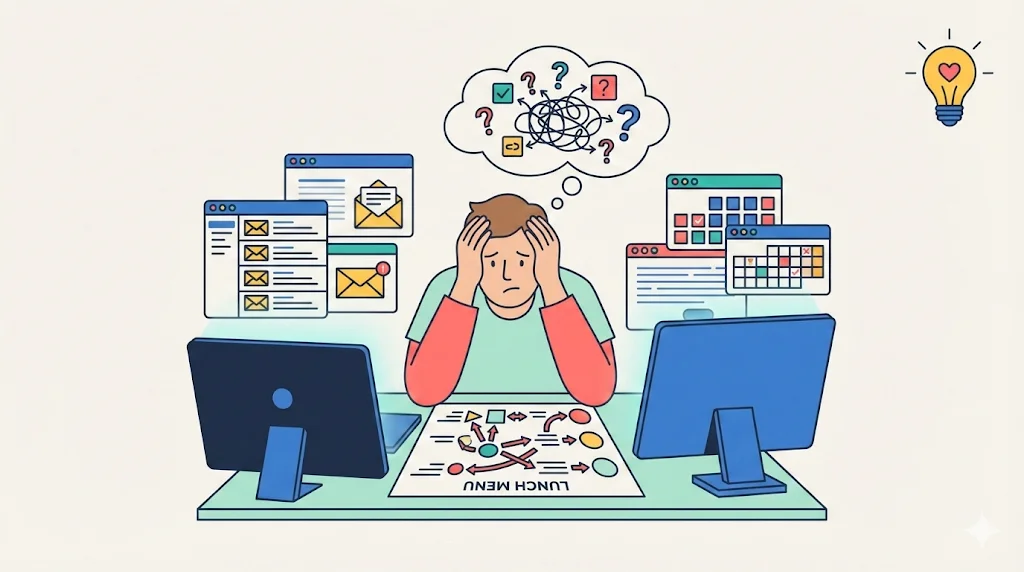
Alex has not had a dramatic crisis. His day is normal—just crowded. Messages, meetings, small requests, quick approvals, tiny edits. Each one is a decision. By lunchtime, he opens a menu and feels a surprising wave of stress. He is not choosing a life path. He is choosing a sandwich. So why does it feel so hard?

What decision fatigue really is

Decision fatigue is a mental slowdown after many choices without real recovery. Think of it like a daily “decision budget.” When you spend it all morning, you may have less patience and less mental space later.

In real life, decision fatigue often looks like:

  • Heavy small choices: even simple decisions feel unusually hard.
  • Avoidance and delay: you push decisions away because your brain wants relief.
  • The easiest exit: you choose the fastest option, not the best one, just to close the task.

This can happen to anyone, especially when life is noisy, digital, and full of options.

Why it matters across your whole life

Decision fatigue matters because tired decision-making does not stay in one area. It spreads.

  • Work: Late in the day, you may accept unclear tasks, answer too quickly, or stop checking details. You may also avoid a choice that needs courage—like giving feedback or setting a boundary—because it feels like “too much.”
  • Money: A tired mind can prefer short-term comfort: quick purchases, skipping price checks, or forgetting a plan you made when you were calm.
  • Health habits: When you are drained, cooking, exercise, and sleep routines can feel like extra decisions. It becomes easier to pick sugary snacks, stay up scrolling, or skip movement.
  • Relationships: Decision fatigue can reduce emotional skill. You may choose silence instead of a gentle talk, or choose sharp words instead of clear ones—especially at night.

Notice the pattern: the problem is not intelligence. It is timing and energy.

Practical ways to reduce it (without “one perfect hack”)

The goal is not to control every moment. The goal is to protect energy for the decisions that matter.

  1. Limit unnecessary options.
    Fewer tabs. Fewer apps. Fewer “maybe” plans. Even small reductions lower the daily load.

  2. Decide important things earlier.
    Put key choices in your “fresh hours”: planning, budgeting, hard conversations, and complex work.

  3. Use routines and defaults.
    Create “automatic answers” for repeated decisions: a weekday breakfast, a simple lunch list, a standard workout time, a checklist for common work tasks. Defaults are not boring—they are protection.

  4. Build short recovery breaks.
    Real recovery is small but consistent: a 3-minute walk, water, stretching, slow breathing, or quiet time between meetings. These breaks reset attention.

A warm truth: decision fatigue is normal. When you design your day with fewer choices and better timing, you do not just feel calmer—you make room for wiser decisions.


Key Points

  • Decision fatigue can look like heavy small choices, delays, or choosing the easiest exit.
  • It matters because tired decisions can lower quality in work, money, health, and relationships.
  • Reduce it by limiting options, deciding early, using routines/defaults, and taking short recovery breaks.

Words to Know

decision budget /dɪˈsɪʒən ˈbʌdʒ.ɪt/ (n) — your daily limit for good decisions
fatigue /fəˈtiːɡ/ (n) — tiredness after effort
overload /ˈoʊ.vɚ.loʊd/ (n) — too much to handle
avoidance /əˈvɔɪ.dəns/ (n) — staying away from a hard choice
impulsive /ɪmˈpʌl.sɪv/ (adj) — fast and not well planned
boundary /ˈbaʊn.dɚ.i/ (n) — a clear limit you set with others
short-term /ˌʃɔːrtˈtɝːm/ (adj) — happening soon, not later
default /dɪˈfɔːlt/ (n) — the standard choice
routine /ruːˈtiːn/ (n) — a repeated daily plan
recovery /rɪˈkʌv.ɚ.i/ (n) — getting energy back
reset /riːˈset/ (v) — to return to a better state
priority /praɪˈɔːr.ə.t̬i/ (n) — what matters most
clarity /ˈkler.ə.t̬i/ (n) — clearness and understanding

📝 Practice Questions

B2 – True/False

  1. Decision fatigue can spread across work, money, health habits, and relationships.
  2. The article says there is one perfect hack that works for everyone.
  3. Using routines and defaults can protect energy for more important choices.

B2 – Multiple Choice

  1. In the article, decision fatigue is described as:
    A. A normal mental slowdown after many choices
    B. A talent for fast decisions
    C. A sign that you should never decide anything

  2. Which example best fits “decide important things earlier”?
    A. Shopping online late at night
    B. Starting five new tasks at once
    C. Planning your budget in the morning

  3. What is the main purpose of short recovery breaks?
    A. To add more choices
    B. To reset attention and reduce overload
    C. To avoid responsibility forever

B2 – Short Answer

  1. Explain how decision fatigue can change both health and relationship choices.
  2. Describe one “default” system you could set for weekdays and why it helps.
  3. In your own life, when are your “fresh hours,” and what should you do then?

B2 – True/False

  1. True
  2. False
  3. True

B2 – Multiple Choice

  1. A
  2. C
  3. B

B2 – Short Answer

  1. When tired, you may choose fast food and also choose silence or sharp words.
  2. Example: a weekday meal plan; it removes extra choices and saves energy.
  3. Example answer: morning; do planning, budgeting, and hard conversations then.