Wisdom English Learn about the world. Grow your English.
Science, Tech & Future

How Smartphones Changed Life

A1 A2 B1 B2

Smartphones sit in our pockets all day. They connect us, guide us, and entertain us — but they can also steal time and focus. This topic explores both sides in simple English.

A1 Level

How one screen helps us feel close

A Small Phone, A Big Part of Life

How one screen helps us feel close

In a busy city, an office worker comes home late.
The room is dark and quiet.
They feel tired and a little lonely.

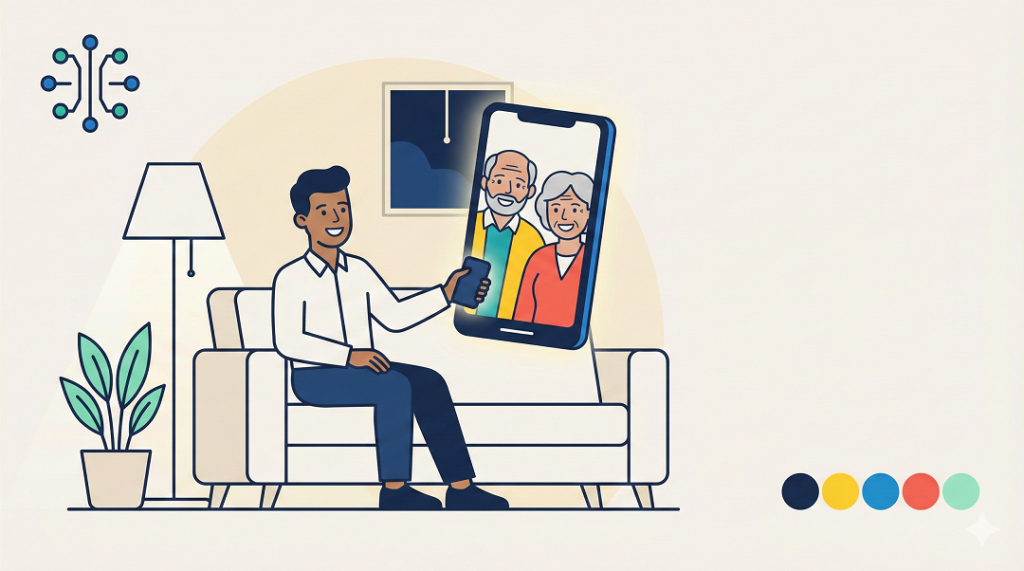
They sit on the sofa and turn on their smartphone.
The screen makes a soft light in the room.
A new message appears from their mother.
“How was your day?” she writes.

They smile and start a video call.
On the small screen, they see their parents at the kitchen table.
They talk, laugh, and show a photo from the train ride home.
For a moment, the worker does not feel so far away.

A smartphone is not just for calls.
It is many tools in one.
You can send messages, take photos, check the time, and listen to music.
You can look at a map, order food, or write a quick note.

Many people check their phone many times each day.
Sometimes it is helpful.
Sometimes it is just a habit.

At the end of the night, the worker puts the phone on the table.
They feel calm and connected.
The small screen cannot replace real hugs.
But it can be a small bridge between people who live far apart.


Key Points

  • A smartphone helps people stay close with calls, messages, and photos.
  • One small phone can do many daily tasks in one place.

Words to Know

phone /fəʊn/ (n) — a device you use to call or message people
smartphone /ˈsmɑːrtˌfəʊn/ (n) — a phone that also works like a small computer
screen /skriːn/ (n) — the flat part of a phone where you see images and text
message /ˈmesɪdʒ/ (n) — written words you send to someone on a phone or computer
video call /ˈvɪdiəʊ kɔːl/ (n) — talking while you see each other on a screen
photo /ˈfəʊtəʊ/ (n) — a picture made with a camera or phone
map /mæp/ (n) — a picture that shows streets, places, or countries
habit /ˈhæbɪt/ (n) — something you do again and again, often without thinking


📝 Practice Questions

A1 – True/False

  1. The office worker in the story feels lonely before using their smartphone.
  2. In the A1 article, the smartphone is used only for games.
  3. A smartphone can help people who live far apart feel closer.

A1 – Multiple Choice

  1. Where is the office worker when they call their parents?
    A) On a bus
    B) In their small apartment
    C) At the office

  2. What lights up the dark room?
    A) The TV
    B) The street lamp
    C) The phone screen

  3. Which is NOT mentioned as a tool in a smartphone in the A1 article?
    A) Map
    B) Washing machine
    C) Camera for photos

A1 – Short Answer

  1. Who does the worker call in the evening?
  2. How does the worker feel after the video call?
  3. Name one daily task a smartphone can help with.

A1 – True/False

  1. True
  2. False — it is used for calls, messages, photos, and more.
  3. True

A1 – Multiple Choice

  1. B
  2. C
  3. B

A1 – Short Answer (sample answers)

  1. Their parents / their mother and father
  2. Calm and connected / less lonely
  3. Sending messages, taking photos, checking the time, looking at a map, etc.

A2 Level

How smartphones change our daily routine

Living With the Little Screen

How smartphones change our daily routine

On Monday morning, a college student walks into class.
Many students sit with phones in their hands.
Some send quick messages under the desk.
Some scroll through photos and short videos.

The teacher watches for a minute, then smiles.
“Today,” she says, “please put your phones in this box for 30 minutes.”
The room is suddenly full of nervous laughter.
Students look at each other.
Some feel almost “naked” without their phones.

Phones All Day Long

For many people, the smartphone is the first thing they see in the morning.
It may wake them up as an alarm.
At breakfast, they read messages or news.
On the way to school or work, they check maps, bus times, or music apps.

During the day, they use banking apps to pay for coffee.
They show a digital ticket on the screen.
They take quick photos of notes on the board.
They use language or learning apps to study on the bus.

Experts say that mobile learning is a big change.
Now people can study almost anywhere with just a phone and internet.

Helpful Partner, Demanding Friend

But there is another side.
The student in our story counts how many times they touch their phone in one day.
It is more than they expected.

Notifications light up the screen again and again.
New messages, likes, and videos call, “Look at me now!”
Researchers say our brains lose focus when we jump between apps and tasks too often.

That evening, the student tries something new.
They choose one “phone-free” hour before bed.
No apps, no social media, just a book and some quiet music.
They feel strange at first, then more calm.

Maybe a smartphone is like a strong tool and a noisy friend in one.
It helps with many small jobs.
But sometimes, it also needs a break.


Key Points

  • Smartphones help with daily tasks like maps, tickets, banking, and learning.
  • Constant notifications and checking can hurt focus and make people feel stressed.
  • A small “phone-free” time each day can bring more calm.

Words to Know

routine /ruːˈtiːn/ (n) — the usual way you do things each day
scroll /skrəʊl/ (v) — to move a screen up or down to see more content
notification /ˌnəʊtɪfɪˈkeɪʃən/ (n) — a small message on your screen from an app
alarm /əˈlɑːrm/ (n) — a sound or signal that wakes you or reminds you
digital /ˈdɪdʒɪtəl/ (adj) — using numbers or computers instead of paper or film
ticket /ˈtɪkɪt/ (n) — a piece of paper or digital code to travel or enter a place
social media /ˌsəʊʃəl ˈmiːdiə/ (n) — websites or apps where people share posts and messages
focus /ˈfəʊkəs/ (n, v) — (n) attention; (v) to give attention to one thing
depend /dɪˈpend/ (v) — to need or trust something too much
calm /kɑːm/ (adj) — relaxed, quiet, and not stressed


📝 Practice Questions

A2 – True/False

  1. In the A2 story, the teacher asks students to keep their phones in their bags during the whole class.
  2. People often use smartphones for tickets, banking, and maps in daily life.
  3. The student decides to try one “phone-free” hour before bed.

A2 – Multiple Choice

  1. How do many students feel when the teacher collects their phones?
    A) Calm and happy
    B) Nervous and “naked”
    C) Angry and shouting

  2. What do experts say about constant checking of phones?
    A) It always makes people smarter
    B) It can break focus
    C) It stops all stress

  3. What does the student do during the “phone-free” hour?
    A) Plays more games
    B) Reads a book and listens to music
    C) Cleans the classroom

A2 – Short Answer

  1. Name two daily tasks people do with their phones in the A2 article.
  2. Why do notifications keep appearing on the student’s screen?
  3. How does the student feel after trying a phone-free hour?

A2 – True/False

  1. False — she asks them to put phones in a box for 30 minutes.
  2. True
  3. True

A2 – Multiple Choice

  1. B
  2. B
  3. B

A2 – Short Answer (sample answers)

  1. Using maps, paying at a café, showing tickets, using banking apps, studying with learning apps (any two)
  2. Apps send many alerts to bring people back and keep them checking.
  3. More calm / more relaxed / less stressed.

B1 Level

Why notifications feel stronger than your plans

Your Phone, Your Attention

Why notifications feel stronger than your plans

A young parent sits at the kitchen table.
Their child wants to play with blocks on the floor.
At the same time, the parent’s smartphone lights up again and again.

A work message appears in one app.
A family photo appears in another.
A group chat for school parents starts to buzz.
All of this happens on one small screen lying between the plates.

The parent wants to finish a short work task and then play.
But every notification pulls their eyes away.
Soon, both the work and the child receive only half attention.

One Screen, Many Worlds

Smartphones bring many parts of life into one place.
Work, family, friends, news, games, and learning all share the same screen.
Research groups like the Pew Research Center say many adults check their phones dozens of times each day.

This design is not an accident.
Most apps are free to download.
They earn money when people stay inside the app for a long time.
So the app sends notifications, auto-plays the next video, and shows endless feeds.
Each small red dot or vibration tells your brain, “Something might be important.”

Over time, your brain learns to expect these tiny rewards.
You may open your phone “just to check,” even when nothing special is happening.

Changing Communication

Smartphones have also changed how we talk.
Short messages, emojis, and voice notes replace many long conversations.
Online groups make it easy to share news with many people at once.

This can be wonderful.
A family spread across three countries can stay close.
A language learner can join an online study group.
Workers can send quick updates from home or from a train.

But fast, screen-based talk can also create misunderstandings.
A short message can sound cold or angry.
People may feel pressure to answer at once, day and night.

Setting Small Rules

The parent in our first scene decides to test a new rule.
From 6 p.m. to 7 p.m., notifications are off.
The phone stays on a shelf, not on the table.

At first, they worry they will miss something important.
Soon they notice something else: their mind feels quieter.
The child smiles because the parent is really present.

Technology itself is not “good” or “bad.”
But the way we design our days around the phone matters.
A few simple rules can help your attention belong to you again.


Key Points

  • Smartphones mix work, family, and social life on one small screen.
  • Apps use notifications and endless feeds to pull our attention many times a day.
  • Simple personal rules, like “phone-free hours,” can protect focus and relationships.

Words to Know

attention /əˈtenʃən/ (n) — the mental energy you give to something
notification /ˌnəʊtɪfɪˈkeɪʃən/ (n) — a small alert from an app on your device
feed /fiːd/ (n) — a long list of posts, photos, or videos you can scroll through
vibration /vaɪˈbreɪʃən/ (n) — a small shaking movement, like a phone on silent mode
reward /rɪˈwɔːrd/ (n) — something pleasant you get after an action
emoji /ɪˈməʊdʒi/ (n) — a small digital picture that shows a feeling or idea
misunderstanding /ˌmɪsʌndərˈstændɪŋ/ (n) — when people do not understand each other correctly
present /ˈprezənt/ (adj) — fully in the moment and paying attention
screen time /ˈskriːn taɪm/ (n) — the amount of time you spend looking at a device
multitasking /ˈmʌltiˌtæskɪŋ/ (n) — trying to do several things at the same time
dependence /dɪˈpendəns/ (n) — a strong need for something, like a device or habit
remote work /rɪˈməʊt wɜːrk/ (n) — working from home or another place, not in the office


📝 Practice Questions

B1 – True/False

  1. In the B1 story, the parent’s work and family messages arrive on the same smartphone.
  2. Most apps make less money when people stay longer inside the app.
  3. Short messages and emojis have changed the way people communicate.

B1 – Multiple Choice

  1. What problem does the parent face at the kitchen table?
    A) The phone battery is dead.
    B) Notifications interrupt work and time with the child.
    C) The internet is broken in the whole city.

  2. Why do many apps send so many notifications?
    A) To help people sleep better
    B) To earn money by keeping users inside the app
    C) To save phone battery

  3. What new rule does the parent test?
    A) No phone after midnight
    B) No notifications during work hours
    C) Notification-free time between 6 p.m. and 7 p.m.

B1 – Short Answer

  1. How does mixing work, family, and social life on one screen affect attention?
  2. Give one positive change in communication that smartphones bring.
  3. What is one simple personal rule that can protect relationships from phone overuse?

B1 – True/False

  1. True
  2. False — they usually earn more when people stay longer.
  3. True

B1 – Multiple Choice

  1. B
  2. B
  3. C

B1 – Short Answer (sample answers)

  1. It splits attention; the person cannot fully focus on work or family.
  2. Families in different countries can stay close; groups can share news quickly.
  3. Setting phone-free hours, turning off notifications at certain times, keeping the phone away from the table, etc.

B2 Level

How smartphones reshape attention, opportunity, and society

Pocket Superpower, Hidden Costs

How smartphones reshape attention, opportunity, and society

In a crowded city street, a young activist holds up a smartphone.
With one hand, she records a short video about a local river clean-up project.
With the other, she sends the clip to three social media groups.
Within hours, volunteers sign up from across the city.
They organize rides, share maps, and collect small online donations — all through their phones.

This is the bright side of smartphones.
A small device in your pocket can help you learn, work, organize, and speak to the world.
But on the bus home, the same activist feels exhausted.
Her screen is now full of angry comments, new messages, and breaking news alerts.
She cannot rest; the phone will not stop talking.

The Attention Economy in Your Hand

Cheap, powerful smartphones plus fast mobile internet have created what many writers call an “attention economy.”
Companies do not only sell products; they also fight for your time and focus.
Social media platforms, games, and news apps compete to keep you inside their world.

Designers use data and algorithms — step-by-step rules for making decisions — to learn what you click, like, and watch.
They then show you more of it.
A report from the World Economic Forum notes that digital platforms can shape not just what we see, but how we feel and act in daily life.
OECD studies on digital well-being also warn that heavy phone use, especially at night, is linked with poor sleep, lower focus, and higher stress.

The result is a strange mix.
The same tool that gives you freedom — to learn a language on the train or join a remote-work meeting — can also trap your attention in short, addictive loops.

Inequality in a Connected World

Smartphones do not affect everyone equally.
In rich cities, people may worry about screen time or privacy.
In poorer areas, many people still share one device in a family or must choose between data and food.

A smartphone can open doors to mobile banking, online classes, and job platforms.
For a student in a small town, one good phone and a stable connection can mean access to world-class lectures.
But if the internet is slow, expensive, or blocked, the gap between “connected” and “left out” becomes even larger.

Reports in magazines like The Economist and MIT Technology Review ask a hard question:
Are smartphones closing the gap between people, or making a new digital divide?

Toward Healthier Digital Lives

Mental-health researchers also see both hope and risk.
Nature Human Behaviour has published work linking heavy social-media use with loneliness and anxiety in some groups, especially teens.
At the same time, crisis hotlines, therapy apps, and peer-support communities now live inside the same devices.

So what should we do?
We probably cannot and should not try to go back to a world without smartphones.
Instead, governments debate privacy laws and screen-time rules for children.
Schools test “phone parks” at the door of classrooms.
Some companies now design apps and operating systems with digital-well-being tools: clear screen-time reports, focus modes, and bedtime reminders.

For individuals, the first step is honest attention.
How often do you reach for your phone without really choosing to?
Which apps leave you feeling better, and which leave you tense or empty?

The small screen in your hand is a kind of pocket superpower.
It can open doors to learning, work, and global connection.
It can also weaken sleep, focus, and real-world relationships if it is never turned off.
The technology will keep evolving.
The deeper question is how we design our habits, our homes, and our rules so that this tiny computer serves our values — instead of quietly running our lives.


Key Points

  • Smartphones create an “attention economy” where apps compete for user time and focus.
  • Phones can open opportunities in banking, learning, and activism — but also deepen a digital divide.
  • Healthy digital life needs both better design and personal habits that protect sleep, focus, and real relationships.

Words to Know

activist /ˈæktɪvɪst/ (n) — a person who works for social or political change
donation /dəʊˈneɪʃən/ (n) — money or goods given to help a cause
attention economy /əˈtenʃən ɪˈkɒnəmi/ (n) — a system where companies compete for people’s focus
platform /ˈplætfɔːrm/ (n) — a digital service where users share, communicate, or do tasks
algorithm /ˈælɡəˌrɪðəm/ (n) — a set of rules a computer follows to make decisions
digital divide /ˈdɪdʒɪtəl dɪˈvaɪd/ (n) — the gap between people with and without good digital access
privacy /ˈpraɪvəsi/ (n) — control over who can see your personal information or actions
remote work /rɪˈməʊt wɜːrk/ (n) — work done away from a main office, often using the internet
well-being /ˌwelˈbiːɪŋ/ (n) — a state of being healthy and feeling good in life
anxiety /æŋˈzaɪəti/ (n) — strong worry or nervousness about something
screen-time report /ˈskriːn taɪm rɪˈpɔːrt/ (n) — information showing how long you used your devices
focus mode /ˈfəʊkəs məʊd/ (n) — a phone setting that limits notifications to help concentration
notification /ˌnəʊtɪfɪˈkeɪʃən/ (n) — a pop-up alert from an app
digital dependence /ˈdɪdʒɪtəl dɪˈpendəns/ (n) — strong need to use digital devices very often
algorithmic feed /ˌælɡəˈrɪðmɪk fiːd/ (n) — a content list chosen for you by an algorithm

📝 Practice Questions

B2 – True/False

  1. The activist uses a smartphone to organize a river clean-up project.
  2. The “attention economy” means companies compete mainly for people’s money, not their focus.
  3. Some reports warn that heavy smartphone use can harm sleep and mental health.

B2 – Multiple Choice

  1. What question do some reports in The Economist and MIT Technology Review ask?
    A) Are smartphones making people more intelligent?
    B) Are smartphones closing or widening the digital gap?
    C) Will smartphones replace all computers?

  2. Which of the following is part of the “attention economy” described in the article?
    A) Apps and platforms compete to keep users’ attention
    B) Governments ban all social media
    C) Phones only work for calls and texts

  3. Which is mentioned as a step toward healthier digital lives?
    A) Ignoring all new technology
    B) Privacy laws, school phone rules, and well-being tools in apps
    C) Using two phones instead of one

B2 – Short Answer

  1. How do algorithms shape what people see on their smartphone screens?
  2. Give one way smartphones can increase opportunity and one way they can increase inequality.
  3. According to the article, what is the “deeper question” we must ask about smartphones and our lives?

B2 – True/False

  1. True
  2. False — they compete for both money and attention, especially focus.
  3. True

B2 – Multiple Choice

  1. B
  2. A
  3. B

B2 – Short Answer (sample answers)

  1. Algorithms study user behavior and then choose and show content that will keep each person watching or clicking.
  2. Opportunity: access to mobile banking, online education, job platforms, social movements. Inequality: people without good devices or internet are left further behind.
  3. How to design our habits, homes, and rules so that smartphones serve our values, instead of quietly controlling our lives.