Wisdom English Learn about the world. Grow your English.
History & Civilization

How People Rest on Weekends Around the World

A1 A2 B1 B2

From long family lunches to park walks, busy markets, and quiet Sundays, weekend rest changes by culture, weather, and local rules. Learn to compare habits without stereotypes.

A1 Level

People rest in simple, different ways.

Weekends Around the World

People rest in simple, different ways.

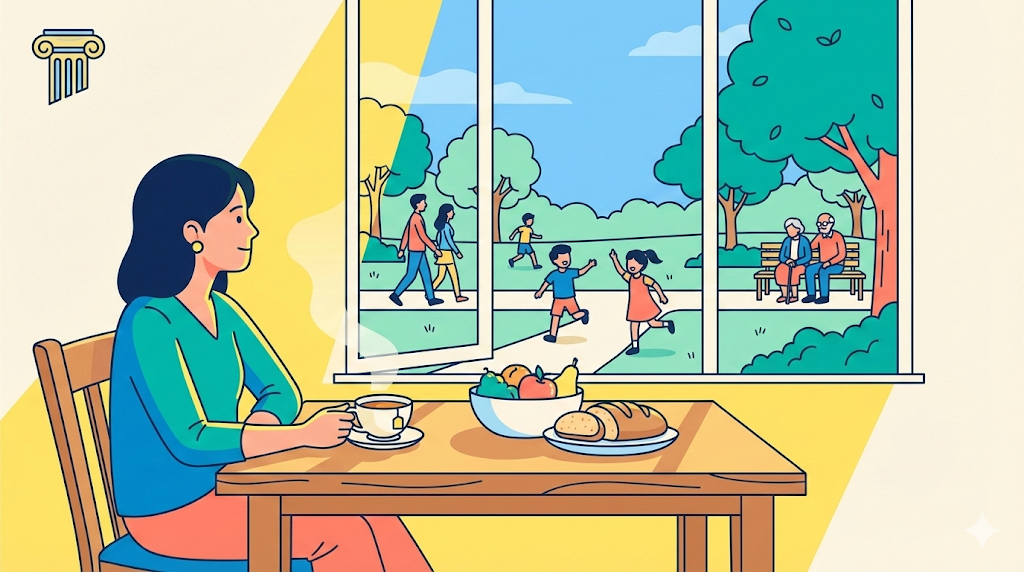
Jina wakes up on Saturday. Sunlight is on the table. There is tea, fruit, and warm bread. Her phone buzzes. A friend in another country writes, “What do you do on weekends?”

Jina smiles. She is tired from work. She does not want a busy weekend. She wants a slow day.

At home, her family eats a longer meal than on weekdays. They talk, laugh, and take their time. In many places, weekends mean a bigger breakfast or lunch. People cook at home or visit relatives. A long meal can feel like a calm break for the heart.

After the meal, Jina puts on a light jacket. She walks to a small park near her home. She sees parents with children, older people sitting on benches, and friends taking photos. In many countries, people rest outside on weekends. Some go to parks. Some go to the beach. Some hike in the hills. Fresh air and a little movement can help the body feel new again.

Jina returns home calm. Her weekend rest is simple. But somewhere far away, her friend may rest in a different way. That is normal. A weekend is recharge time, and each place has its own rhythm.


Key Points

  • Many people rest with a longer family meal on weekends.
  • Many people also rest by going outside, like to a park.

Words to Know

weekend /ˈwiːkˌend/ (n) — Saturday and Sunday
rest /rest/ (n) — time to relax
family /ˈfæməli/ (n) — parents and children
meal /miːl/ (n) — breakfast, lunch, or dinner
tired /ˈtaɪərd/ (adj) — needing sleep or rest
outside /ˌaʊtˈsaɪd/ (adv) — not inside
park /pɑːrk/ (n) — a green place to walk
recharge /ˌriːˈtʃɑːrdʒ/ (v) — get energy again


📝 Practice Questions

A1 – True/False

  1. Jina eats a slow weekend meal with her family.
  2. People rest only by sleeping at home.
  3. Many people rest by going outside on weekends.

A1 – Multiple Choice

  1. Where does Jina go after the meal?
    A. A small park
    B. A train station
    C. A movie theater

  2. What does a long weekend meal feel like in the story?
    A. A calm break
    B. A loud contest
    C. A fast race

  3. What is a weekend in the article?
    A. Recharge time
    B. Exam time
    C. Travel time only

A1 – Short Answer

  1. Where does Jina walk?
  2. What is on the table?
  3. Weekends are time to __.

A1 – True/False

  1. True
  2. False
  3. True

A1 – Multiple Choice

  1. A
  2. A
  3. A

A1 – Short Answer

  1. A small park
  2. Tea and fruit
  3. rest
A2 Level

Markets, quiet Sundays, and small traditions.

Many Ways to Rest on Weekends

Markets, quiet Sundays, and small traditions.

Omar sits in a town square on a weekend afternoon. He hears music from a street festival. He also smells bread from a market. His phone shows a message from his cousin abroad: “Our weekend is Friday–Saturday. What about yours?”

Omar thinks, “Weekends are not the same everywhere.” Some places rest on Saturday–Sunday. Other places rest on different days. Work hours, religion, and local laws can shape the weekend rhythm.

People time: events and markets

Omar wants quiet rest, but his friends invite him out. “Come to the market,” they say. “We can eat, talk, and walk.” Omar goes with them. The market is busy, but it feels warm. Many people meet on weekends because weekdays are too full. Community events—markets, sports games, worship, club meetings, or volunteering—help people feel connected.

Shopping time and slow time

After the market, Omar passes a shopping street. In some cities, weekend shopping is a big routine. People buy food, clothes, and gifts. But in other places, Sunday is a quiet day. Some stores close early, and families stay home. These rules can protect rest time, but they can also feel strange to visitors.

Later, Omar chooses a small rest tradition. He drinks tea slowly at home and takes a short nap. Some people relax with a bath, a sauna, a book, or a long talk with family. Public health educators often say that both active rest (walking outside) and quiet rest (sleeping and reading) can support well-being.

Weather also changes weekends. In hot places, people may rest inside at midday and go out in the evening. In cold places, people may meet in cafés or indoor gyms. City life and rural life are different, too. Cities offer many events and shops. Rural areas may feel quieter, with family visits and small home work. Around the world, the goal is similar: to feel ready for a new week.


Key Points

  • Weekends can be for community events, markets, and meeting people.
  • Shopping and store hours change weekend routines in different places.
  • Rest can be active (walking) or quiet (sleeping, reading).

Words to Know

community /kəˈmjuːnəti/ (n) — people living together in a place
event /ɪˈvent/ (n) — a planned activity for people
market /ˈmɑːrkɪt/ (n) — a place to buy and sell things
routine /ruːˈtiːn/ (n) — something you do often
shop /ʃɑːp/ (v) — buy things
quiet /ˈkwaɪət/ (adj) — not noisy, calm
tradition /trəˈdɪʃən/ (n) — a custom people keep
balance /ˈbæləns/ (n) — a good mix of two things
season /ˈsiːzən/ (n) — time of year (spring, summer, etc.)


📝 Practice Questions

A2 – True/False

  1. Omar’s cousin has a weekend on Friday–Saturday.
  2. In some places, Sunday is quiet with fewer open stores.
  3. Weather never changes weekend plans.

A2 – Multiple Choice

  1. Why do many people meet on weekends?
    A. Weekdays are too busy
    B. Weekdays are always free
    C. Weekdays have no events

  2. Which is an example of active rest?
    A. Walking outside
    B. Checking prices online
    C. Posting photos all day

  3. Where is Omar at the start of the story?
    A. A town square
    B. A hospital
    C. A classroom

A2 – Short Answer

  1. Name one community event from the article.
  2. What two kinds of rest are mentioned?
  3. What can make weekend shopping common in a city?

A2 – True/False

  1. True
  2. True
  3. False

A2 – Multiple Choice

  1. A
  2. A
  3. A

A2 – Short Answer

  1. A market / a festival / worship / volunteering (any one)
  2. Active rest and quiet rest
  3. Stores stay open late / easy transport (any one)
B1 Level

Same need, different rhythms.

Planning a Weekend Across Cultures

Same need, different rhythms.

Mina and Lucas meet at an airport café on Friday night. Mina grew up in Seoul. Lucas grew up near Barcelona. They are excited for their first weekend trip together. But when they plan Saturday, they stop and laugh. Mina says, “Let’s visit a market and shop a little.” Lucas says, “Let’s have a long family-style lunch, then rest.”

They both want to recharge. They just imagine “rest” in different ways.

A friend in Dubai texts them: “Enjoy your weekend!” It is already Saturday there, because his free days are Friday–Saturday. This reminder helps Mina and Lucas stay curious. UNESCO often notes that daily life traditions are part of culture, and weekends are one of those traditions.

Why weekend habits differ

First, social expectations matter. In some places, weekends are for meeting many people: friends, relatives, neighbors, or a club. In other places, weekends are for protecting private time. Neither is better. They simply answer different needs.

Second, local systems shape what is possible. Store opening hours, public transport, and city design can push people toward certain habits. If buses run often and parks are close, it is easy to go outside. If shops stay open late, shopping becomes a normal weekend routine. If many stores close on Sunday, people plan for home meals and quiet walks instead.

Third, weather and seasons change the “best” weekend plan. In rainy seasons, people may choose indoor cafés, movies, or home visits. In warm seasons, beaches, hiking trails, and street festivals feel inviting.

Active rest and quiet rest

Leisure studies researchers often describe two kinds of rest. Active rest means moving: walking, sports, dancing, or exploring nature. Quiet rest means slowing down: sleeping, reading, praying, cooking, or taking a bath. Both can help. Too much activity can make you tired again. Too much “do nothing” can feel lonely. Balance matters.

Designing a shared weekend

Mina and Lucas decide to mix their styles. They start with a community market in the morning. They eat a long lunch with slow conversation. In the afternoon, they take the metro to a park and sit under trees. In the evening, they keep phones away and watch the city lights.

National statistics offices in many countries track how people use time, and the pattern is clear: weekends are often used for recovery and relationships. The details look different, but the human need is the same.

When you travel or meet someone new, notice their weekend rhythm. It is a small window into how their society protects rest—and how you might protect yours, too.


Key Points

  • Weekend habits differ because of expectations, systems, and weather.
  • Active rest and quiet rest can both be healthy.
  • A mixed weekend can help people rest and connect.

Words to Know

expectation /ˌekspekˈteɪʃən/ (n) — what people think you should do
system /ˈsɪstəm/ (n) — a set of rules and services
transport /ˈtrænspɔːrt/ (n) — buses, trains, and travel
opening hours /ˈoʊpənɪŋ ˈaʊərz/ (n) — times when stores are open
leisure /ˈliːʒər/ (n) — free time for rest
active /ˈæktɪv/ (adj) — moving, doing things
private /ˈpraɪvət/ (adj) — personal, not public
rural /ˈrʊrəl/ (adj) — countryside, not a city
visitor /ˈvɪzɪtər/ (n) — a person who travels to a place
recover /rɪˈkʌvər/ (v) — get strength back
rhythm /ˈrɪðəm/ (n) — a repeating pattern


📝 Practice Questions

B1 – True/False

  1. Mina and Lucas disagree because they imagine “rest” differently.
  2. If many stores close on Sunday, people may plan home meals.
  3. Active rest and quiet rest can never work together.

B1 – Multiple Choice

  1. Which factor is NOT mentioned as shaping weekend habits?
    A. Weather and seasons
    B. Store opening hours
    C. Eye color

  2. Which is an example of quiet rest in the article?
    A. Reading a book
    B. Running a marathon
    C. Shopping in a crowded mall

  3. What do Mina and Lucas do in the evening?
    A. Keep phones away and watch city lights
    B. Work extra hours at the airport
    C. Cancel the weekend and go home

B1 – Short Answer

  1. Give one reason weekend habits differ.
  2. What message does their friend in Dubai send?
  3. What can a weekend rhythm show about a society?

B1 – True/False

  1. True
  2. True
  3. False

B1 – Multiple Choice

  1. C
  2. A
  3. A

B1 – Short Answer

  1. Social expectations / local systems / weather (any one)
  2. “Enjoy your weekend!”
  3. How it protects rest (and connection)
B2 Level

When “free time” is shaped by modern life.

Weekends, Burnout, and the Search for Real Rest

When “free time” is shaped by modern life.

On Saturday morning, Hana opens her phone before she opens the curtains. She feels burned out from a fast week. Her plan is simple: “I will fix this with a perfect weekend.” She orders coffee, scrolls social media, and makes a long list—shopping, brunch, photos, and posts. By Sunday night, she is still tired. Her weekend was full, but it did not feel like rest.

In a global city, this story is common. Weekends are supposed to recharge us, yet they can become another kind of work: planning, spending, commuting, and performing happiness online.

The weekend as a social design

The OECD often studies work-life balance and time use. One lesson is that free time is not equal. Some workers have stable hours and protected weekends. Others work nights, weekends, or multiple jobs. When free time is scarce, rest becomes a luxury, not a habit. City size also matters. Long travel time can steal hours that could be used for sleep, family meals, or nature.

At the same time, many people still try to protect recovery. Around the world, you can see long weekend meals, worship days, community markets, sports clubs, sauna or bath culture, and “slow mornings.” These are not random. They are cultural tools for keeping people healthy and connected.

Consumer weekends and digital weekends

Modern economies also shape how weekends look. In some places, shopping streets, malls, and delivery apps make the weekend feel like a spending season. Advertising pushes the idea that buying is relaxing. But a consumer weekend can create stress: money worries, crowds, and the feeling that you must keep up.

Digital life adds a second layer. Social media can connect friends across borders, but it can also eat attention. A weekend can vanish into scrolling, comparing, and endless messages. Researchers at places like the London School of Economics have warned that digital overload can reduce well-being, even when we think we are “resting.” The result is a tired mind in a still body.

Rebuilding healthier weekends

Some communities are trying new answers. Cities create car-free streets on Sundays. Neighborhood groups run local festivals, repair cafés, and volunteer days. Companies test shorter workweeks or flexible schedules. Journalists in The Economist and policy writers in Foreign Affairs often discuss these experiments as a response to burnout and low trust in modern life.

Hana decides to test a smaller weekend plan. She chooses one “people thing” and one “quiet thing.” On Saturday, she meets a friend at a local market, buys simple food, and walks home. On Sunday, she sleeps a little more, cooks lunch, and takes a long bath. Her phone stays in another room for one hour. She does not post. She just feels her own pace.

Weekends are a mirror. They show what we miss in weekdays: sleep, family, nature, or community. Around the world, people solve this in different ways—active rest or quiet rest, busy markets or quiet Sundays. The deeper question is not “Which weekend is best?” It is “Which weekend helps you return to life with a clearer mind and a kinder heart?”


Key Points

  • Modern weekends can become stressful because of consumer and digital pressure.
  • Free time is unequal, so rest is easier for some people than others.
  • Healthier weekends often mix connection, quiet time, and simpler plans.

Words to Know

burnout /ˈbɝːnaʊt/ (n) — extreme tiredness from long stress
consumer /kənˈsuːmər/ (adj) — related to buying and spending
digital /ˈdɪdʒɪtəl/ (adj) — related to phones and the internet
attention /əˈtenʃən/ (n) — focus of the mind
inequality /ˌɪnɪˈkwɑːləti/ (n) — unfair difference between people
commute /kəˈmjuːt/ (n) — travel to and from work
luxury /ˈlʌkʃəri/ (n) — something not everyone can have
overload /ˈoʊvərˌloʊd/ (n) — too much to handle
well-being /ˌwel ˈbiːɪŋ/ (n) — feeling healthy and okay in life
flexible /ˈfleksəbəl/ (adj) — able to change easily
protect /prəˈtekt/ (v) — keep safe
experiment /ɪkˈsperɪmənt/ (n) — a test of a new idea
mirror /ˈmɪrər/ (n) — something that shows the truth

📝 Practice Questions

B2 – True/False

  1. Hana feels fully rested after a weekend of shopping and social media.
  2. The OECD often studies time use and work-life balance.
  3. Digital life can connect people but also drain attention.

B2 – Multiple Choice

  1. Why can rest become a luxury for some workers?
    A. Free time is scarce
    B. Free time is unlimited
    C. Cities have no weekends

  2. What is one change Hana makes at the end?
    A. One “people thing” and one “quiet thing”
    B. More posts and more shopping
    C. No sleep and more planning

  3. Which community idea is mentioned as a new answer?
    A. Car-free streets on Sundays
    B. Longer commutes on weekends
    C. Closing all parks forever

B2 – Short Answer

  1. Why can a consumer weekend create stress?
  2. What question does the article ask at the end?
  3. Name two modern forces that shape weekends today.

B2 – True/False

  1. False
  2. True
  3. True

B2 – Multiple Choice

  1. A
  2. A
  3. A

B2 – Short Answer

  1. Money worries, crowds, and pressure to keep up
  2. Which weekend helps you return with a clearer mind and kinder heart?
  3. Consumer culture and digital attention (also ok: unequal free time, long commutes)