Wisdom English Learn about the world. Grow your English.
History & Civilization

How Early Humans Survived the Ice Ages

A1 A2 B1 B2

Ice Age life was tough, but humans adapted. See how fire, warm clothing, safe shelters, planned hunting, and strong teamwork helped early people survive and move with the seasons.

A1 Level

Warmth, food, and staying together

How Early Humans Survived the Ice Ages

Warmth, food, and staying together

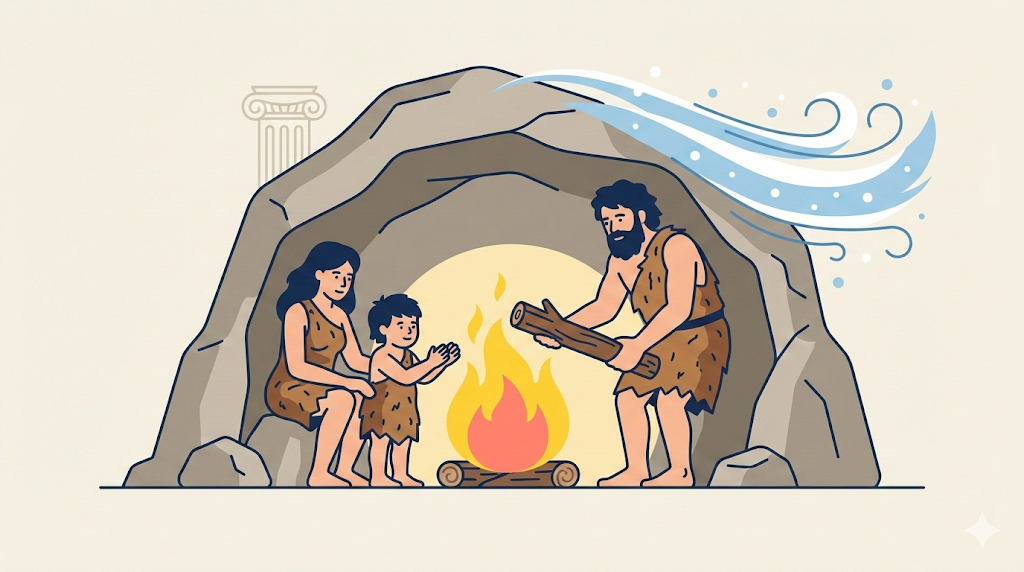
Snow blows past the cave mouth. Inside, a small family sits close to a fire. A young boy holds his hands near the flames. The wind is loud, and the fire is getting weak.

An adult adds dry wood. The flames grow again. Warm light fills the cave. Everyone moves closer. In the Ice Ages, this small moment could decide life or death.

Ice Ages were long cold times. Big ice sheets covered many places. Cold air can steal body heat fast. If your body loses heat, you can get very sick.

So early humans learned simple, smart habits. They kept fire going. Fire gave heat and light. It also helped cook meat, so food was safer to eat. They wore animal skins. Fur trapped warm air near the body. They also made simple shelters. A cave, a tent, or a windbreak could block cold wind.

Most of all, they stayed in a group. People shared food and work. One person watched the fire. Another prepared food. Someone cared for children and older people. Together, the group had a better chance.

Outside, the snow keeps falling. Inside, the fire keeps burning. In the Ice Age, warmth came from flames—and from staying close to each other.


Key Points

  • Fire, clothes, and shelter helped people stay warm.
  • Teamwork and sharing helped groups survive.

Words to Know

cold /koʊld/ (adj) — not warm
fire /faɪr/ (n) — burning heat and light
shelter /ˈʃɛltər/ (n) — a place that protects you
fur /fɝː/ (n) — soft animal hair used for warmth
group /ɡruːp/ (n) — people together
share /ʃɛr/ (v) — to give and use together
survive /sərˈvaɪv/ (v) — to stay alive


📝 Practice Questions

A1 – True/False

  1. Ice Ages were warm and rainy.
  2. Fire helped people stay warm.
  3. People often survived better in groups.

A1 – Multiple Choice

  1. What helped trap warm air near the body?
    A. Fur and skins
    B. Wet leaves
    C. Thin ice

  2. Why did people keep a fire burning?
    A. For heat and light
    B. To make snow louder
    C. To stop seasons

  3. What is a shelter?
    A. A place that protects you
    B. A kind of animal
    C. A type of river

A1 – Short Answer

  1. What kept the family warm?
  2. Name one thing people wore.
  3. Did people share food?

A1 – True/False

  1. False
  2. True
  3. True

A1 – Multiple Choice

  1. A
  2. A
  3. A

A1 – Short Answer

  1. The fire
  2. Fur / animal skins
  3. Yes
A2 Level

Daily life: layers, fire, food, and movement

How Early Humans Survived the Ice Ages

Daily life: layers, fire, food, and movement

Late autumn feels different. The days are shorter, and the air is sharp. At a small camp, a parent and an older daughter sort animal skins near the fire. Winter is coming, and they need better clothes and more food.

Warm Clothes and Simple Shelters

The parent shows the daughter how to make layers. “One skin is good,” the parent says, “but two layers are better.” Layers trap warm air. That warm air stays close to the body. The daughter uses a small needle made from bone. With sinew (animal thread), she sews a coat so the wind cannot slip inside.

Shelter matters too. Some groups used caves. Others built tents with wooden poles and skins. They also made windbreaks with stones and branches. A good shelter blocks wind and keeps the fire safer.

Fire was more than warmth. It gave light for night work. It helped cook meat, which made food easier to chew and safer to eat. A bright fire could also make wild animals keep their distance.

Food and Sharing

Cold weather changes food. Some plants disappear. Many animals move to new places. So people watched tracks and planned hunts. A group hunt was safer than going alone. One person could drive an animal, while another waited with a spear. After the hunt, they cut meat with stone tools and saved useful parts like fat and hides.

They also learned simple storage. Meat could be dried near smoke. This made food last longer. When a hunt was good, the group shared. Sharing lowered risk. If one person had a bad day, the group could still eat.

Sometimes the best plan was to move. If the herds went south, people followed. If a valley had more water and trees, they camped there until the season changed again.

That evening, the coat is finished. The dried meat is placed higher in the shelter, away from damp ground. The parent smiles at the daughter. In the Ice Ages, survival was not only about being strong. It was about preparing, learning, and helping each other before the cold arrived.


Key Points

  • Layers and better sewing kept warm air close to the body.
  • Fire helped with warmth, cooking, and safer camps.
  • Planned hunting, storage, and sharing lowered risk.

Words to Know

layer /ˈleɪər/ (n) — one level on top of another
needle /ˈniːdəl/ (n) — a small tool for sewing
sinew /ˈsɪnjuː/ (n) — strong animal tissue used as thread
tent /tɛnt/ (n) — a skin or cloth shelter
windbreak /ˈwɪndbreɪk/ (n) — a wall that blocks wind
track /træk/ (n) — a footprint or sign of an animal
spear /spɪr/ (n) — a long hunting weapon
dried /draɪd/ (adj) — made dry to last longer
store /stɔːr/ (v) — to keep for later


📝 Practice Questions

A2 – True/False

  1. Layers can help keep warm air close to the body.
  2. A group hunt can be safer than hunting alone.
  3. Meat cannot be kept for later in cold times.

A2 – Multiple Choice

  1. What tool helped make better clothing?
    A. A bone needle
    B. A glass phone
    C. A paper fan

  2. Why did people dry meat near smoke?
    A. To make it last longer
    B. To make it heavier
    C. To turn it into water

  3. Why did some groups move to new places?
    A. Animals and water changed
    B. The stars disappeared
    C. Caves became louder

A2 – Short Answer

  1. What does “layers” do for warmth?
  2. Give one reason fire was useful.
  3. What would you store for winter?

A2 – True/False

  1. True
  2. True
  3. False

A2 – Multiple Choice

  1. A
  2. A
  3. A

A2 – Short Answer

  1. It traps warm air inside.
  2. Heat, light, or cooking food.
  3. Dried meat for winter.
B1 Level

When nature shifts, smart groups shift too

How Early Humans Survived the Ice Ages

When nature shifts, smart groups shift too

The group wakes up to a quiet morning. The river near their camp is lower than last month. More worrying, there are fewer animal tracks in the mud. A hunter points to the empty ground and says, “The herds changed their path.”

Ice Age life often worked like this. Seasons shifted. Cold and dry weather changed plants, water, and where animals could live. When food moved, people had to choose: stay and risk hunger, or move and risk the unknown.

Warmth Is a System

Staying warm was not one trick. It was a system. Fire was the center. It gave heat, light, and cooked food. But fire also needed care. Someone collected dry wood. Someone protected embers at night, so the group could restart flames in the morning.

Clothing helped too. Animal skins and fur trapped warm air. Bone needles and thread made better fits, so wind could not rush inside. Shelter reduced heat loss. A cave could work, but many groups built tents or windbreaks to block strong wind and keep snow out.

Food, Tools, and Planning

Getting food in winter was dangerous. Hunting alone could mean injury or death. So many groups planned hunts with roles. One person watched the land. Another made spears and sharp stone blades. Others helped surround an animal to guide it into a safer place for a kill.

Tools mattered. Stone points cut deeper. Scrapers cleaned hides. Bone and antler tools helped with sewing. Better tools meant less wasted energy and more food brought back to camp.

Groups also used simple storage. They dried meat, saved fat, and used hides for clothing and shelter. These choices turned one good hunt into many meals.

Teamwork Reduces Risk

Sharing was not only “nice.” It was practical. A sick person could not hunt, but could still repair tools or watch children. Older people could teach where to find water or which plants are safe. In hard weeks, shared food kept the group alive long enough for the next hunt.

Moving Together

When resources dropped, movement was often the best answer. People followed animal paths, searched for water, and looked for places with natural shelter. Moving as a group reduced risk. Children could be carried. Injured people could be supported. Knowledge also moved with the group: where to find flint, when the river freezes, and which valley stays calmer in strong wind.

Museums like the Smithsonian National Museum of Natural History describe Ice Age life as skilled and adaptive. The big lesson is simple: survival came from flexible plans. When nature changed, people changed too—by working together, sharing food, and using smart tools instead of raw strength.


Key Points

  • Warmth came from a system: fire care, clothing, and shelter.
  • Better tools and planned hunting increased safety and food.
  • Teamwork and migration helped groups handle changing seasons.

Words to Know

season /ˈsiːzən/ (n) — a time of year, like winter
embers /ˈɛmbərz/ (n) — small pieces of hot wood in a fire
trap /træp/ (v) — to hold something inside
fit /fɪt/ (n) — how well something matches your body
role /roʊl/ (n) — a job in a group plan
surround /səˈraʊnd/ (v) — to close in from all sides
scrape /skreɪp/ (v) — to rub off with a sharp edge
fat /fæt/ (n) — rich body tissue, high energy food
valley /ˈvæli/ (n) — low land between hills
migrate /ˈmaɪɡreɪt/ (v) — to move to a new place over time
risk /rɪsk/ (n) — danger or chance of harm


📝 Practice Questions

B1 – True/False

  1. Ice Age seasons could change animal paths.
  2. Better tools always made hunting risk-free.
  3. Sharing food could help a group survive hard weeks.

B1 – Multiple Choice

  1. What is the best meaning of “embers”?
    A. Small hot pieces in a fire
    B. Fresh snow on a hill
    C. New leaves in spring

  2. Why did groups plan hunts with roles?
    A. To lower danger and waste
    B. To make the camp smaller
    C. To avoid using tools

  3. What is one reason people migrated?
    A. Resources moved with seasons
    B. Rivers stopped existing forever
    C. Fire could not be made anymore

B1 – Short Answer

  1. Name two parts of the “warmth system.”
  2. Why is teamwork practical, not only kind?
  3. What kind of place might a group choose to camp?

B1 – True/False

  1. True
  2. False
  3. True

B1 – Multiple Choice

  1. A
  2. A
  3. A

B1 – Short Answer

  1. Fire and warm clothing.
  2. It lowers risk and protects everyone.
  3. A valley with water and shelter.
B2 Level

Survival as a full system: tools, culture, and care

How Early Humans Survived the Ice Ages

Survival as a full system: tools, culture, and care

Before sunrise, Evan checks the fire pit. The night was colder than he expected, and the embers are low. He adds dry grass, then thin sticks, then thicker wood. A small flame returns. People nearby open their eyes. In a winter camp, the first task is always the same: make warmth again.

Evan is the group’s toolmaker. He learned from an older relative who could shape stone with a calm, steady rhythm. That skill is not “extra.” In the Ice Ages, skill could mean survival.

Cold Pressure Creates New Ideas

Ice Ages were not one long storm. They were repeated cold periods, with huge ice sheets in some regions. Cold is dangerous because it steals body heat. When people lose heat, thinking slows, hands shake, and mistakes grow.

So groups built a “warmth package.” Fire gave heat, light, cooked food, and safer nights. Clothing turned animal skins into portable shelter. When bone needles and strong thread appeared, clothes could fit better and keep wind out. Camps also improved. Caves helped, but people also made tents, snow walls, and windbreaks that reduced heat loss.

These changes show a big pattern: when the environment became harsher, humans became more inventive.

Food Is Risk, So Cooperation Becomes Strategy

Ice Age food was not easy. Animals were strong, the ground could be slippery, and daylight was short. A hunt could bring a feast—or an injury.

To lower risk, groups created roles. Scouts watched tracks. Hunters worked in pairs. Others prepared spears, carried supplies, or waited to help. After a kill, the group used every part: meat for calories, fat for energy, hide for clothes, bone for tools. Drying meat and saving fat turned today’s success into next week’s meals.

Care was also part of the plan. Keeping children warm protected the future. Helping an injured adult protected knowledge. Older members often held the “map” in their memory: where flint can be found, which river freezes first, and where animals pass in late winter. When a group protects its weak moments, it becomes stronger overall.

Mobility and Knowledge Sharing

One evening, visitors arrive from another camp. They say the ice edge has shifted, opening a new route to the north. There may be more animals there, but also stronger wind and fewer trees. The group discusses the trade-off: stay where the shelter is known, or move toward new resources.

When herds moved, people moved. Migration was not random. It followed seasons, water, and safe routes. Over time, groups met other groups. They traded materials, shared tool ideas, and learned new ways to solve the same problems. A better spear point, a smarter shelter shape, or a new sewing method could spread across regions.

Institutions like the British Museum and the Smithsonian highlight that Ice Age people were planners, makers, and teachers. The deeper lesson is almost modern: survival is a system. Technology matters, but it works best with culture—shared rules, shared learning, and shared care.

On the coldest nights, the fire still needs wood. But humans added something else to the flames: cooperation. In the Ice Ages, nature did not offer comfort, so people built it—piece by piece, together.


Key Points

  • Harsh climate pressure pushed humans to improve fire, clothing, and shelters.
  • Food was risky, so roles, storage, and care became survival strategies.
  • Migration and knowledge sharing helped ideas spread across regions.

Words to Know

innovate /ˈɪnəveɪt/ (v) — to make something new and useful
pressure /ˈprɛʃər/ (n) — strong force that pushes change
hypothermia /ˌhaɪpəˈθɜːrmiə/ (n) — dangerous low body temperature
calories /ˈkæləriz/ (n) — units of energy in food
portable /ˈpɔːrtəbəl/ (adj) — easy to carry
thread /θrɛd/ (n) — thin string used for sewing
route /ruːt/ (n) — a path from one place to another
trade-off /ˈtreɪd ɔːf/ (n) — a choice with pros and cons
material /məˈtɪriəl/ (n) — stuff used to make things
culture /ˈkʌltʃər/ (n) — shared habits, rules, and ideas
transfer /trænsˈfɜːr/ (v) — to pass something to others
cooperation /koʊˌɑːpəˈreɪʃən/ (n) — working together to help everyone

📝 Practice Questions

B2 – True/False

  1. Ice Ages were repeated cold periods, not one single winter.
  2. Cooperation mattered because food and warmth were easy to get.
  3. Knowledge sharing could spread better tools across regions.

B2 – Multiple Choice

  1. What does “trade-off” mean in migration decisions?
    A. A choice with both gains and losses
    B. A promise with no risk
    C. A rule that never changes

  2. Which set best shows the Ice Age “warmth package”?
    A. Fire, fitted clothing, wind-blocking shelter
    B. Loud music, bright paint, soft sand
    C. Fast cars, tall towers, plastic toys

  3. Why did caring for elders help survival?
    A. They carried memory and skills
    B. They stopped the seasons
    C. They made animals disappear

B2 – Short Answer

  1. Explain one way roles reduced hunting risk in Ice Age life.
  2. What is one example of knowledge that could guide migration routes?
  3. What modern lesson about “systems” do you take from this topic?

B2 – True/False

  1. True
  2. False
  3. True

B2 – Multiple Choice

  1. A
  2. A
  3. A

B2 – Short Answer

  1. Scouts tracked; hunters paired; helpers carried supplies and assisted.
  2. Flint locations, river freeze times, or animal paths in late winter.
  3. Survival needs connected parts—tools, plans, learning, and care.

Content format follows Wisdom Topics Master System Prompt v4.1.