How Early Humans Survived the Ice Ages
Survival as a full system: tools, culture, and care
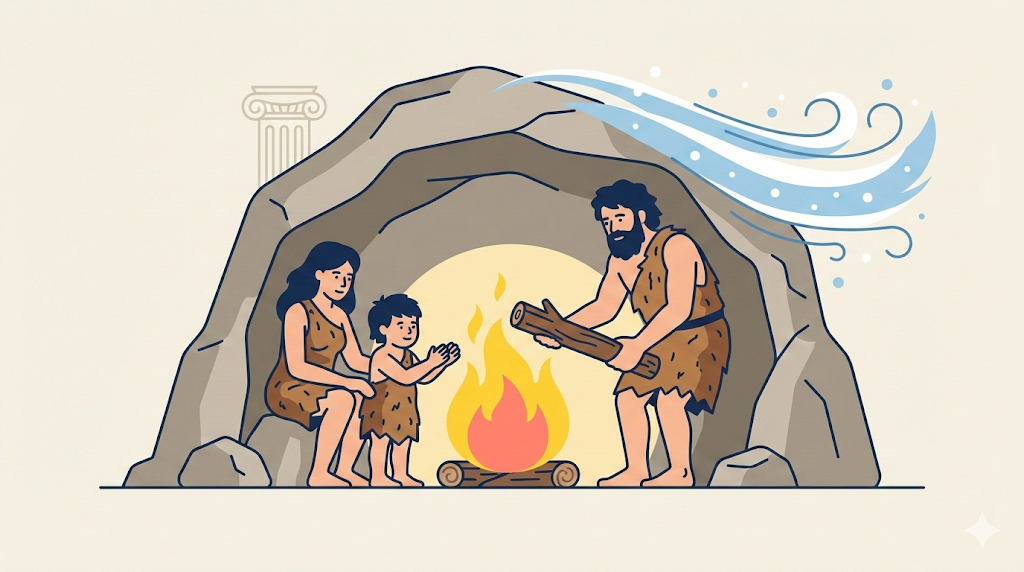
Before sunrise, Evan checks the fire pit. The night was colder than he expected, and the embers are low. He adds dry grass, then thin sticks, then thicker wood. A small flame returns. People nearby open their eyes. In a winter camp, the first task is always the same: make warmth again.
Evan is the group’s toolmaker. He learned from an older relative who could shape stone with a calm, steady rhythm. That skill is not “extra.” In the Ice Ages, skill could mean survival.
Cold Pressure Creates New Ideas
Ice Ages were not one long storm. They were repeated cold periods, with huge ice sheets in some regions. Cold is dangerous because it steals body heat. When people lose heat, thinking slows, hands shake, and mistakes grow.
So groups built a “warmth package.” Fire gave heat, light, cooked food, and safer nights. Clothing turned animal skins into portable shelter. When bone needles and strong thread appeared, clothes could fit better and keep wind out. Camps also improved. Caves helped, but people also made tents, snow walls, and windbreaks that reduced heat loss.
These changes show a big pattern: when the environment became harsher, humans became more inventive.
Food Is Risk, So Cooperation Becomes Strategy
Ice Age food was not easy. Animals were strong, the ground could be slippery, and daylight was short. A hunt could bring a feast—or an injury.
To lower risk, groups created roles. Scouts watched tracks. Hunters worked in pairs. Others prepared spears, carried supplies, or waited to help. After a kill, the group used every part: meat for calories, fat for energy, hide for clothes, bone for tools. Drying meat and saving fat turned today’s success into next week’s meals.
Care was also part of the plan. Keeping children warm protected the future. Helping an injured adult protected knowledge. Older members often held the “map” in their memory: where flint can be found, which river freezes first, and where animals pass in late winter. When a group protects its weak moments, it becomes stronger overall.
Mobility and Knowledge Sharing
One evening, visitors arrive from another camp. They say the ice edge has shifted, opening a new route to the north. There may be more animals there, but also stronger wind and fewer trees. The group discusses the trade-off: stay where the shelter is known, or move toward new resources.
When herds moved, people moved. Migration was not random. It followed seasons, water, and safe routes. Over time, groups met other groups. They traded materials, shared tool ideas, and learned new ways to solve the same problems. A better spear point, a smarter shelter shape, or a new sewing method could spread across regions.
Institutions like the British Museum and the Smithsonian highlight that Ice Age people were planners, makers, and teachers. The deeper lesson is almost modern: survival is a system. Technology matters, but it works best with culture—shared rules, shared learning, and shared care.
On the coldest nights, the fire still needs wood. But humans added something else to the flames: cooperation. In the Ice Ages, nature did not offer comfort, so people built it—piece by piece, together.
Key Points
- Harsh climate pressure pushed humans to improve fire, clothing, and shelters.
- Food was risky, so roles, storage, and care became survival strategies.
- Migration and knowledge sharing helped ideas spread across regions.
Words to Know
innovate /ˈɪnəveɪt/ (v) — to make something new and useful
pressure /ˈprɛʃər/ (n) — strong force that pushes change
hypothermia /ˌhaɪpəˈθɜːrmiə/ (n) — dangerous low body temperature
calories /ˈkæləriz/ (n) — units of energy in food
portable /ˈpɔːrtəbəl/ (adj) — easy to carry
thread /θrɛd/ (n) — thin string used for sewing
route /ruːt/ (n) — a path from one place to another
trade-off /ˈtreɪd ɔːf/ (n) — a choice with pros and cons
material /məˈtɪriəl/ (n) — stuff used to make things
culture /ˈkʌltʃər/ (n) — shared habits, rules, and ideas
transfer /trænsˈfɜːr/ (v) — to pass something to others
cooperation /koʊˌɑːpəˈreɪʃən/ (n) — working together to help everyone