Anne Frank: A Diary of Hope
Why one young voice still shapes memory and human rights.
A visitor walks through a museum house, moving slowly from room to room.
The rooms are quiet. Light falls on plain walls and narrow stairs.
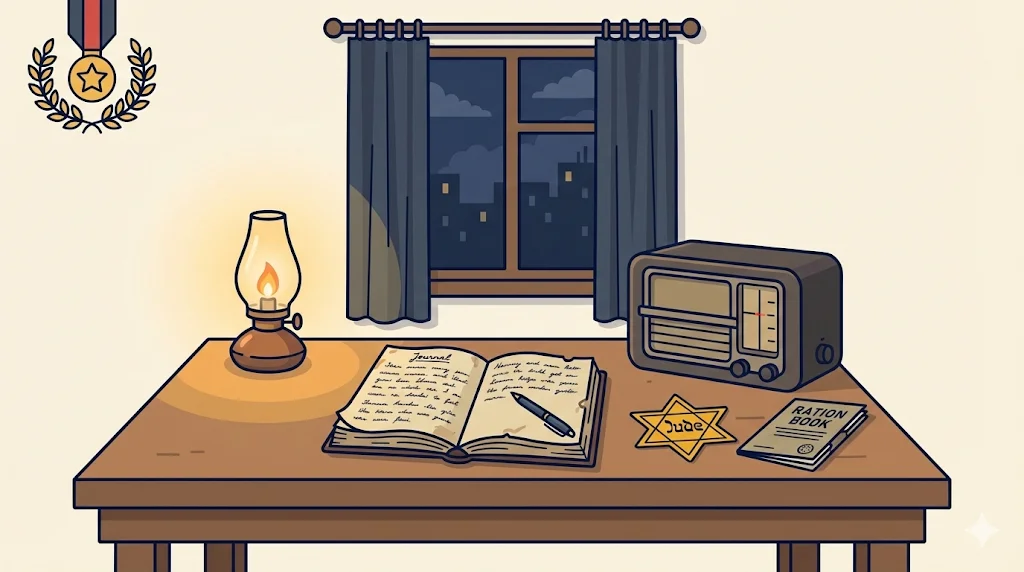
Behind glass, there is a diary—small, ordinary, almost like any notebook.
And yet the air feels heavy with meaning, because this notebook carried a young person’s inner life through extreme danger.
A Teenager’s Ordinary Feelings in an Unordinary World
Anne Frank was a Jewish teenager during World War II.
Her family went into hiding to escape persecution.
Inside that closed space, Anne wrote about daily routines and private thoughts: irritation, loneliness, love, dreams, and fear.
This is one reason her diary is so powerful.
It does not speak in the language of big speeches.
It speaks in the language of a real human mind trying to grow up too fast.
Hope in her diary is not denial. It is a decision to keep meaning and kindness alive, even when the outside world feels inhuman.
How Prejudice Becomes a System
Anne’s story also helps us understand a wider mechanism.
Prejudice can start as words and social jokes.
But when prejudice becomes “normal,” it can turn into rules, and then into policy.
From there, a society can begin pushing some people outside the circle of protection.
Institutions like the United States Holocaust Memorial Museum and Yad Vashem collect documents and testimonies that show how quickly this shift can happen when fear, propaganda, and power work together.
Anne’s diary gives that system a human face—one teenager’s voice, written in a small room.
Why Personal Narratives Change Us
Large numbers can feel distant. Personal stories do not.
A diary invites empathy because it lets readers live inside another person’s days.
That empathy can shape values: how we think about freedom, dignity, and human rights.
Historians and educators also discuss the ethics of remembrance:
How do we remember without turning suffering into entertainment?
How do we teach history with respect, accuracy, and care?
Many museums, including the Anne Frank House, focus on daily life details and honest language to help readers learn without sensationalism.
Anne Frank’s diary has lasted because it offers two truths at once:
the world can become cruel—and a human voice can still stay clear.
Her words cannot change what happened to her, but they can change what happens after her: how we recognize early signs of hate, how we protect the vulnerable, and how we choose courage and education over silence.
Key Points
- Anne’s diary shows hope as a choice, not a denial of danger.
- Her story helps explain how prejudice can grow into persecution through systems and policy.
- Personal narratives build empathy and support human rights through ethical remembrance.
Words to Know
propaganda /ˌprɑː.pəˈɡæn.də/ (n) — messages made to control opinions
policy /ˈpɑː.lə.si/ (n) — an official rule or plan
ethics /ˈeθ.ɪks/ (n) — ideas about right and wrong actions
remembrance /rɪˈmem.brəns/ (n) — the act of remembering with respect
testimony /ˈtes.tə.moʊ.ni/ (n) — a person’s story of what they saw or lived
document /ˈdɑː.kjə.mənt/ (n) — written proof or record
vulnerable /ˈvʌl.nɚ.ə.bəl/ (adj) — easy to harm or hurt
dignity /ˈdɪɡ.nə.ti/ (n) — quiet human worth
empathy /ˈem.pə.θi/ (n) — understanding others’ feelings
prejudice /ˈpredʒ.ə.dɪs/ (n) — unfair negative ideas about a group
persecution /ˌpɝː.sɪˈkjuː.ʃən/ (n) — cruel treatment for identity or beliefs
narrative /ˈner.ə.tɪv/ (n) — a story that explains events
witness /ˈwɪt.nəs/ (n) — a person or text that shows what happened
human rights /ˈhjuː.mən raɪts/ (n) — basic rights every person should have