Wisdom English Learn about the world. Grow your English.
Great Lives

How Yo-Yo Ma Uses Music to Connect Cultures

A1 A2 B1 B2

A backstage meeting turns into a lesson: listen with curiosity, collaborate with respect, and tell the “why” so audiences can cross cultural bridges together.

A1 Level

Listening first can connect people from many places.

Yo-Yo Ma and Music Bridges

Listening first can connect people from many places.

Backstage, a cellist meets a musician with an instrument he does not know.
They smile. They bow.
Then they try to begin the song.

But they cannot agree.
The cellist starts with a strong sound.
The other musician starts softly.
Both feel confused.

Yo-Yo Ma is a famous cellist.
He often works with musicians from many traditions.
He shows one important idea: listen first.

When you hear an unfamiliar style, do not say, “That is strange.”
Say, “Teach me.”
Curiosity opens a door.

Next, he tries to collaborate with equals.
This means no one is “small.”
Every tradition has dignity and space.
They do not use other music like a decoration.
They share the stage.

Finally, he helps people share the story.
He explains the “why” behind the music.
Maybe the song is for travel, hope, or loss.
When the audience understands the story, they feel closer.

Music can be different.
But feelings can be the same.
When we listen, respect, and explain, we can connect.


Key Points

  • Listen with curiosity, and treat new styles like teachers.
  • Work as equals and share the “why” so people can follow.

Words to Know

curiosity /ˌkjʊr.iˈɒs.ə.ti/ (n) — wanting to learn more
tradition /trəˈdɪʃ.ən/ (n) — a long-held way of doing things
bridge /brɪdʒ/ (n) — something that connects two sides
equal /ˈiː.kwəl/ (adj) — the same in value and respect
dignity /ˈdɪɡ.nə.ti/ (n) — quiet respect and worth
audience /ˈɔː.di.əns/ (n) — people watching or listening
explain /ɪkˈspleɪn/ (v) — to make something clear


📝 Practice Questions

A1 – True/False

  1. Yo-Yo Ma often works with musicians from many traditions.
  2. Listening with curiosity can help people learn a new style.
  3. Sharing the story is not important for the audience.

A1 – Multiple Choice

  1. What should you do with an unfamiliar music style?
    A. Treat it like a teacher
    B. Ignore it and play louder
    C. Laugh at it

  2. What does “collaborate with equals” mean?
    A. One tradition is always the leader
    B. Every tradition has dignity and space
    C. Only one musician can speak

  3. Why should musicians explain the “why” of a song?
    A. To make the song longer
    B. To test the audience
    C. To help the audience feel connected

A1 – Short Answer

  1. Where do the musicians meet in the story?
  2. What word means “wanting to learn”?
  3. What should you share with the audience?

A1 – True/False

  1. True
  2. True
  3. False

A1 – Multiple Choice

  1. A
  2. B
  3. C

A1 – Short Answer

  1. Backstage
  2. Curiosity
  3. The story / the “why”
A2 Level

Respect, teamwork, and story can turn music into a shared home.

How Yo-Yo Ma Builds Cultural Connection

Respect, teamwork, and story can turn music into a shared home.

Backstage, two musicians meet before a concert. One holds a cello. The other holds an unfamiliar instrument. They want to start one song together, but they stop after the first notes. The rhythm feels different. The “right” beginning is not the same for both.

This small moment shows a bigger truth: cultural connection is not automatic. It takes a way of thinking. Yo-Yo Ma is known for working across traditions. His approach teaches three simple steps.

Listen Before You Play

First, he starts with listening. He treats unfamiliar styles as teachers, not “exotic extras.” He asks questions. He notices the small details: timing, tone, and silence. When you listen with curiosity, you do not rush to judge. You learn.

Collaborate as Equals

Second, he collaborates with equals. This is more than “playing together.” It means making real space for every tradition. No one is only a background sound. No one is used for decoration. Each musician can lead, and each musician can follow. Respect shows in the structure of the music, not only in polite words.

Share the Story With the Audience

Third, he shares the story—the “why.” A melody can come from a journey, a celebration, or a hard time. When the audience hears this, they can follow the bridge. They may not know the culture, but they understand the human emotion.

In the end, cultural connection does not mean we become the same. It means we meet with respect. Music can help us practice that kind of meeting.


Key Points

  • Start with listening: treat unfamiliar styles as teachers, not “exotic extras.”
  • Collaborate with equals: give every tradition dignity and space.
  • Share the story: explain the “why” so audiences can follow the bridge.

Words to Know

connect /kəˈnekt/ (v) — to join or feel close
curious /ˈkjʊə.ri.əs/ (adj) — wanting to know more
unfamiliar /ˌʌn.fəˈmɪl.jər/ (adj) — not known or not seen before
collaborate /kəˈlæb.ə.reɪt/ (v) — to work together
dignity /ˈdɪɡ.nə.ti/ (n) — respect and worth
tradition /trəˈdɪʃ.ən/ (n) — a cultural way passed down
audience /ˈɔː.di.əns/ (n) — people who listen or watch
emotion /ɪˈməʊ.ʃən/ (n) — a feeling like joy, fear, or hope
bridge /brɪdʒ/ (n) — a connection between two sides


📝 Practice Questions

A2 – True/False

  1. Cultural connection can take effort and practice.
  2. Equal collaboration means one culture is only decoration.
  3. Sharing the “why” can help listeners understand new music.

A2 – Multiple Choice

  1. What does Yo-Yo Ma do first in cross-cultural music?
    A. He copies the other musician immediately
    B. He listens with curiosity
    C. He refuses to change his style

  2. What is a sign of equal collaboration?
    A. One musician decides everything
    B. The audience leads the rehearsal
    C. Each tradition gets real space in the music

  3. Why does Yo-Yo Ma share the story behind the music?
    A. So audiences can follow the bridge
    B. So the instruments look more expensive
    C. So people forget their feelings

A2 – Short Answer

  1. What problem happens when the musicians start the song?
  2. What should we treat unfamiliar styles as?
  3. What does cultural connection grow from, according to the article?

A2 – True/False

  1. True
  2. False
  3. True

A2 – Multiple Choice

  1. B
  2. C
  3. A

A2 – Short Answer

  1. They can’t agree how to begin.
  2. Teachers
  3. Respect, collaboration, shared emotion
B1 Level

Connection grows when we listen deeply, share power, and tell the “why.”

Yo-Yo Ma’s Lesson: Music as a Cultural Bridge

Connection grows when we listen deeply, share power, and tell the “why.”

Backstage, two musicians prepare to perform together for the first time. They are friendly, but a problem appears quickly. They cannot agree on how the song should begin. One expects a clear beat. The other expects the music to “float” before the beat arrives. Both feel a small tension: If we play my way, will your culture disappear?

Yo-Yo Ma has often stepped into spaces like this. His work suggests that cultural connection is built, not found. It comes from three habits.

1) Listening as Respect

Listening is not just waiting for your turn. It is a form of respect. Yo-Yo Ma’s approach begins with curiosity. Unfamiliar styles are not “exotic extras.” They are teachers. When you listen this way, you stop asking, “Is this normal?” and start asking, “What does this music value?”

2) Collaboration With Equals

Next comes collaboration with equals. Many cross-cultural projects fail because one tradition becomes the “main dish,” and the others become “spices.” Equal collaboration means shared dignity and shared space. In rehearsal, it can look like this: different musicians lead different sections, and decisions are made together. The goal is not to win. The goal is to build something neither side could make alone.

3) Sharing the Story So Others Can Join

Finally, the bridge must reach the audience. Yo-Yo Ma often helps people understand the “why” behind the sound. A rhythm might come from work songs. A melody might carry grief or welcome. When listeners know the story, they can feel the human emotion even if the style is new.

Cultural connection is not sameness. It is meeting across difference with care. Music gives us practice—and that practice can travel into daily life.


Key Points

  • Listen first and treat unfamiliar styles as teachers.
  • Collaborate as equals with dignity and real space for each tradition.
  • Share the “why” so the audience can follow the bridge.

Words to Know

tension /ˈten.ʃən/ (n) — a feeling of stress or disagreement
respect /rɪˈspekt/ (n) — treating others as important
curiosity /ˌkjʊə.riˈɒs.ə.ti/ (n) — desire to learn
value /ˈvæl.juː/ (v) — to see as important
equal /ˈiː.kwəl/ (adj) — fair and balanced
spice /spaɪs/ (n) — something small added for extra flavor
rehearsal /rɪˈhɜː.səl/ (n) — practice before a performance
grief /ɡriːf/ (n) — deep sadness after loss
welcome /ˈwel.kəm/ (n) — a friendly receiving of others
bridge /brɪdʒ/ (n) — something that connects people or ideas
tradition /trəˈdɪʃ.ən/ (n) — a shared cultural practice


📝 Practice Questions

B1 – True/False

  1. Listening can be a form of respect in cross-cultural work.
  2. Some projects fail because one tradition becomes the “main dish.”
  3. Sharing the “why” makes the audience less able to connect.

B1 – Multiple Choice

  1. In the article, what does “listening first” help you do?
    A. Prove your tradition is best
    B. Finish rehearsal faster
    C. Learn what the other music values

  2. What does equal collaboration look like in rehearsal?
    A. Different musicians lead different sections
    B. Only the famous musician leads
    C. Everyone plays the same part always

  3. Why is sharing the story important?
    A. It hides the differences
    B. It helps the audience enter the music
    C. It makes the music more technical

B1 – Short Answer

  1. What question appears under the tension backstage?
  2. Give one example of a “why” behind a melody in the article.
  3. What does the article say cultural connection is not?

B1 – True/False

  1. True
  2. True
  3. False

B1 – Multiple Choice

  1. C
  2. A
  3. B

B1 – Short Answer

  1. “If we play my way, will your culture disappear?”
  2. A journey / celebration / hard time (any one)
  3. Sameness
B2 Level

Bridges are built: with listening, shared power, and stories people can enter.

Yo-Yo Ma and the Art of Cultural Connection Through Music

Bridges are built: with listening, shared power, and stories people can enter.

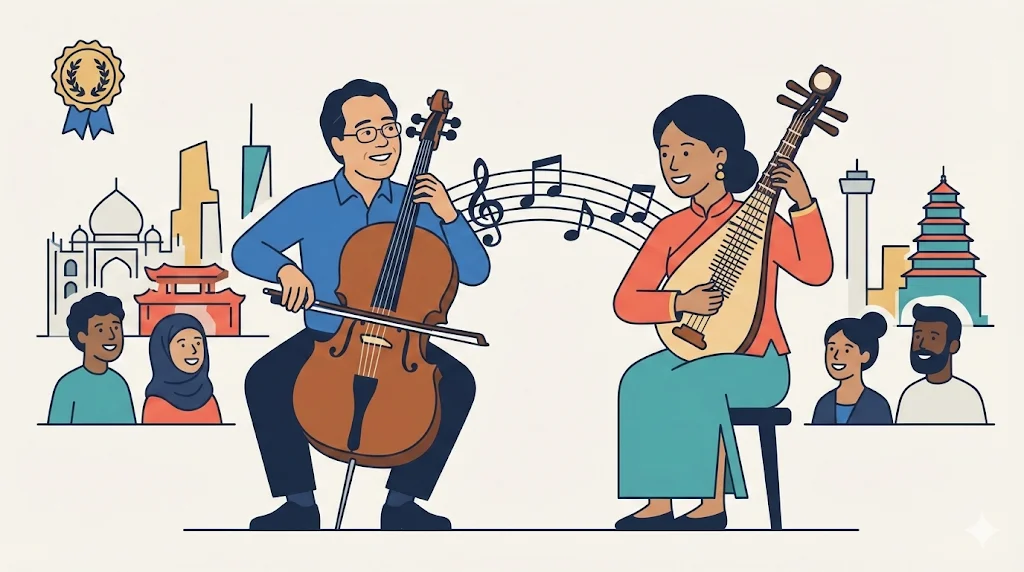
Backstage before a joint performance, a cellist meets a musician holding an unfamiliar instrument. They greet each other with warmth, but the first rehearsal turns awkward. The cellist expects a strong “downbeat.” The other musician expects space before the beat, as if the music should breathe first. It is not just a musical problem. It is a cultural one: Whose rules define “good” music in this room?

Yo-Yo Ma’s public life offers an answer that is both simple and demanding. Cultural connection does not come from mixing sounds quickly. It comes from building trust—and music becomes the practice field.

Listening That Changes Your Center

His first step is listening with real curiosity. In cross-cultural work, “listening” can mean letting the unfamiliar move you off your comfortable center. You treat new styles as teachers, not as “exotic extras” that decorate your own tradition. This kind of listening asks for patience: you may not understand the structure at first, but you stay present long enough to feel what the music is trying to protect—honor, memory, prayer, joy, or endurance.

Collaboration With Equals, Not a Cultural Display

The second step is collaboration with equals. Many global projects look inclusive on the surface while keeping one tradition in control underneath. Equality is not only about kindness; it is about design. Who leads? Who chooses tempo? Who gets solo space? Who explains the piece to the audience? In stronger collaborations, each tradition keeps dignity and real room to speak. The goal is not to melt differences into one “universal” sound. The goal is to let differences talk to each other without one voice shrinking.

Yo-Yo Ma has worked in projects that bring many traditions into one conversation (for example, the Silkroad project). The deeper message is not “everything is the same.” It is: we can build shared meaning without erasing roots.

Sharing the “Why” So the Bridge Reaches the Listener

The third step is storytelling. A performance can feel like a closed door if the listener does not know what they are hearing. But when the “why” is shared—where the rhythm comes from, what the melody carries, why the musicians chose to meet—people can enter the music. They may not share the culture, but they recognize the human emotion inside it.

Cultural connection grows from respect, collaboration, and shared feeling—not sameness. And that matters beyond music. In work, travel, and community life, we keep meeting people with different “beginnings.” Yo-Yo Ma’s lesson is a gentle one: listen until the other person’s logic makes sense, share power in the room, and offer a story that helps everyone walk across.


Key Points

  • Start with listening: treat unfamiliar styles as teachers, not “exotic extras.”
  • Collaborate with equals: build projects where every tradition has dignity and space.
  • Share the story: explain the “why” behind the music so audiences can follow the bridge.

Words to Know

downbeat /ˈdaʊn.biːt/ (n) — the first strong beat in a measure
awkward /ˈɔː.kwəd/ (adj) — uncomfortable or not smooth
curiosity /ˌkjʊə.riˈɒs.ə.ti/ (n) — strong desire to understand
unfamiliar /ˌʌn.fəˈmɪl.jər/ (adj) — new and not known
patience /ˈpeɪ.ʃəns/ (n) — calm waiting without anger
endurance /ɪnˈdjʊə.rəns/ (n) — ability to continue through difficulty
inclusive /ɪnˈkluː.sɪv/ (adj) — welcoming many kinds of people
design /dɪˈzaɪn/ (n) — the way something is planned and built
tempo /ˈtem.pəʊ/ (n) — the speed of music
solo /ˈsəʊ.ləʊ/ (n) — a part played by one person alone
roots /ruːts/ (n) — deep origins or background
storytelling /ˈstɔː.riˌtel.ɪŋ/ (n) — sharing meaning through a story
recognize /ˈrek.əɡ.naɪz/ (v) — to notice and know something again
bridge /brɪdʒ/ (n) — a connection that helps people meet

📝 Practice Questions

B2 – True/False

  1. Equality in collaboration can depend on who controls key decisions.
  2. Cultural connection always means turning different styles into one sound.
  3. Storytelling can help listeners enter unfamiliar music.

B2 – Multiple Choice

  1. What is one cultural question hidden in the rehearsal problem?
    A. Whose rules define “good” music here?
    B. Which instrument is the loudest?
    C. Who arrived earliest backstage?

  2. What is the article’s warning about some “inclusive” projects?
    A. They always avoid rehearsal
    B. They can look diverse but keep one tradition in control
    C. They never use stories for the audience

  3. In the article, what does sharing the “why” mainly do?
    A. It erases roots to create sameness
    B. It opens a door so people can recognize human emotion
    C. It proves one culture is more advanced

B2 – Short Answer

  1. Name two decisions that show “design” in collaboration.
  2. Why does the article say listening can be demanding?
  3. How can Yo-Yo Ma’s lesson transfer to daily life outside music?

B2 – True/False

  1. True
  2. False
  3. True

B2 – Multiple Choice

  1. A
  2. B
  3. B

B2 – Short Answer

  1. Tempo and who leads (also: solo space / who explains)
  2. Because it can move you off your comfortable center.
  3. Listen until others make sense, share power, and share stories in work/travel/community.