Wisdom English Learn about the world. Grow your English.
Mind & Habits

How to Learn From Moments of Silence

A1 A2 B1 B2

When life gets loud, silence gives the mind space. A short pause can cool emotions, reveal hidden thoughts, and help you respond with calm clarity.

A1 Level

Silence can make your mind feel clear.

One Quiet Minute on the Bus

Silence can make your mind feel clear.

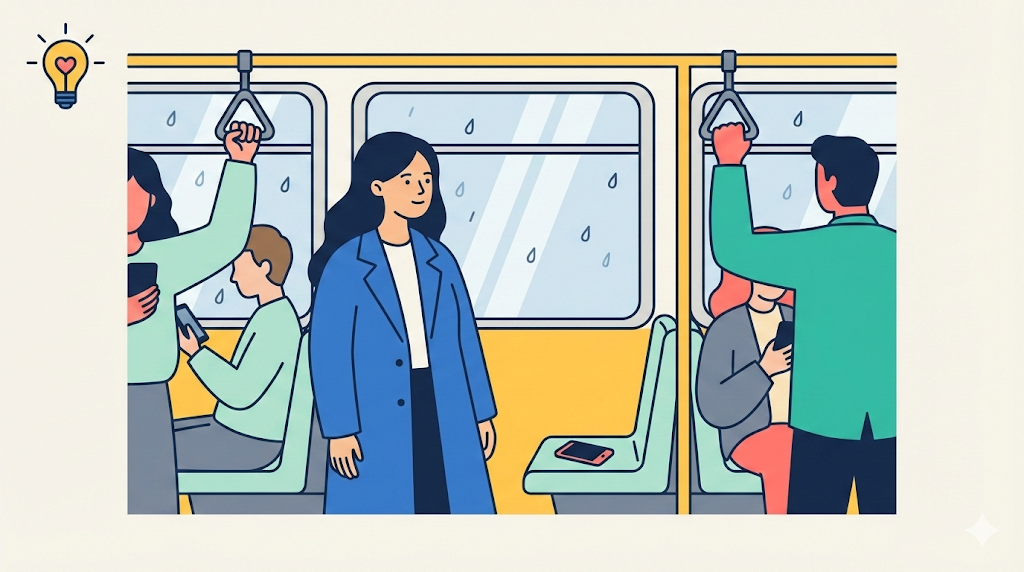
Hana stands on a morning bus. It is crowded. People talk. The bus moves and shakes. Her phone keeps lighting up. A message. A news alert. Another message. Hana feels nervous. Her chest feels tight.

She looks at the bus window. Small raindrops run down the glass. She can hear the rain and the soft sound of the bus. Hana turns her phone screen down. She does not look. She does not answer.

For one minute, she is quiet.

At first, her mind is still busy. She thinks, “I must be fast.” She feels a little fear. But in the quiet, her breath slows. Her shoulders drop. The “hot” feeling becomes smaller.

Then she notices a simple thought: “I am tired.” She did not see it before. The noise was too strong. In the silence, she can hear herself.

When the bus stops, Hana picks up her phone again. The messages are still there. But her mind feels calmer. She thinks, “I can do one thing at a time.” She steps off the bus more slowly, with a steady heart.

Silence is not empty. It is a small space to listen.


Key Points

  • Silence can slow strong feelings.
  • Quiet can help you notice your real thoughts.

Words to Know

silence /ˈsaɪləns/ (n) — no sound
quiet /ˈkwaɪət/ (adj) — with little noise
calm /kɑːm/ (adj) — not excited or angry
thought /θɔːt/ (n) — an idea in your mind
feeling /ˈfiːlɪŋ/ (n) — an emotion
breathe /briːð/ (v) — take air in and out
slow /sloʊ/ (v) — become less fast
clear /klɪr/ (adj) — easy to understand


📝 Practice Questions

A1 – True/False

  1. Hana feels nervous because her phone keeps lighting up.
  2. Hana listens to loud music to feel calm.
  3. Silence can help Hana feel steadier.

A1 – Multiple Choice

  1. Where is Hana in the story?
    A. On a morning bus
    B. In a busy restaurant
    C. At a train station

  2. What does Hana do for one minute?
    A. She talks to strangers
    B. She stays quiet
    C. She watches videos

  3. What does Hana notice in silence?
    A. She is tired
    B. She is hungry
    C. She is late

A1 – Short Answer

  1. What is on the bus window?
  2. What does Hana turn off?
  3. How does Hana feel at the end?

A1 – True/False

  1. True
  2. False
  3. True

A1 – Multiple Choice

  1. A
  2. B
  3. A

A1 – Short Answer

  1. Raindrops
  2. Her phone screen
  3. Calm / steadier
A2 Level

Silence can turn a fast reaction into a wiser choice.

The Message You Don’t Send Yet

Silence can turn a fast reaction into a wiser choice.

Mina and Omar work together. Today, a small problem becomes an argument. Their voices get louder. Then they stop. Mina walks away with her phone in her hand. Her thumb is ready to type.

She wants to send an angry message right now.

A 60-Second Quiet Break

Mina sits down in a hallway chair. She puts the phone on her lap and turns the screen off. She does one simple thing: she stays silent and breathes.

At first, her mind says, “He is wrong.” Her body feels hot. But after a short quiet pause, something changes. The feeling becomes softer. Another thought appears: “I feel hurt, not only angry.”

This is a quiet lesson. When outside noise stops, inside thoughts become easier to notice.

From Reacting to Responding

Mina asks herself a small question: “What do I really want?” She does not want to win. She wants to solve the problem and keep respect.

Some mental health experts say short pauses can help calm emotions and reduce stress. In daily life, even one minute can change your mood.

Mina writes a new message. It is shorter and kinder: “Can we talk in ten minutes? I want to understand.” She still feels serious. But now she has a better judgment.

Silence does not erase problems. It gives you space to choose your next step.


Key Points

  • Quiet can reveal the real feeling under anger.
  • A short pause can help you respond with respect.
  • Silence creates space for a clearer choice.

Words to Know

silence /ˈsaɪləns/ (n) — no sound
pause /pɔːz/ (n) — a short stop
notice /ˈnoʊtɪs/ (v) — see or feel something clearly
inner /ˈɪnər/ (adj) — inside you
voice /vɔɪs/ (n) — the sound of speaking; your inner message
choice /tʃɔɪs/ (n) — a decision
react /riˈækt/ (v) — act fast from emotion
respond /rɪˈspɑːnd/ (v) — answer with thought
judgment /ˈdʒʌdʒmənt/ (n) — a careful decision
stress /stres/ (n) — mental pressure


📝 Practice Questions

A2 – True/False

  1. Mina wants to send an angry message right away.
  2. Silence helps Mina notice she feels hurt.
  3. Silence removes all problems forever.

A2 – Multiple Choice

  1. What does Mina do first?
    A. She buys coffee
    B. She takes a quiet pause
    C. She calls her boss

  2. What feeling does Mina notice under anger?
    A. Hurt
    B. Joy
    C. Pride

  3. What message does Mina choose to send?
    A. A long attack message
    B. A short, respectful message
    C. No message for a week

A2 – Short Answer

  1. How long is the suggested silent pause?
  2. What does Mina turn off?
  3. What does Mina want besides “winning”?

A2 – True/False

  1. True
  2. True
  3. False

A2 – Multiple Choice

  1. B
  2. A
  3. B

A2 – Short Answer

  1. 60 seconds / one minute
  2. The phone screen
  3. Solve the problem / keep respect
B1 Level

Silence can cool emotions and protect your next move.

The Two-Minute Pause Before You Reply

Silence can cool emotions and protect your next move.

Jae is a manager. On a busy afternoon, a critical email arrives. The words feel sharp. Jae’s face gets warm. His mind starts to race: “They think I failed. I need to defend myself.”

His hands move toward the keyboard. Then he stops.

Why Silence Changes the Moment

Jae turns his screen slightly away and sits still for two minutes. No music. No scrolling. Just quiet.

In that small silence, the body often begins to cool. Stress can make the mind loud and fast, but a pause can slow the “heat.” Harvard Health Publishing often explains stress as a body-and-brain response, not just a mood. When you pause, you give the system time to settle.

Jae notices what was hidden: fear. Not only anger.

A Simple Method: Notice → Name → Choose

Jae tries a three-step pattern:

  1. Notice: “My chest is tight. My thoughts are attacking.”
  2. Name: “I feel judged. I fear failure.”
  3. Choose: “What response helps the team?”

Now he has options. He can ask a question. He can wait and reply later. Or he can propose a solution.

A Quiet Start Ritual

A colleague in the same office has a habit: a “quiet start” each morning before opening messages. Two minutes of silence, a slow breath, and a clear question: “What matters today?” It sounds small, but it protects attention and reduces overwhelm.

Jae writes a calmer reply: “Thanks for the feedback. Can you point to one example so I can fix it?” The problem is still real. But his response is wiser.

Maybe you have a place where you react fast. What might change if you added a small silence first?


Key Points

  • Silence can cool the stress “heat” in the body.
  • Naming your real feeling creates clearer judgment.
  • A short pause helps you choose a better response.

Words to Know

attention /əˈtenʃən/ (n) — your focus
overwhelm /ˌoʊvərˈwelm/ (n) — too much to handle
reflect /rɪˈflekt/ (v) — think quietly and deeply
awareness /əˈwer.nəs/ (n) — noticing what is happening
regulate /ˈreɡjəleɪt/ (v) — control and steady something
clarity /ˈklærəti/ (n) — clearness of thought
priority /praɪˈɔːrəti/ (n) — what matters most
trigger /ˈtrɪɡər/ (n) — something that starts a strong feeling
boundary /ˈbaʊndəri/ (n) — a limit you set
react /riˈækt/ (v) — act quickly from emotion
respond /rɪˈspɑːnd/ (v) — answer with thought
steady /ˈstedi/ (adj) — calm and stable


📝 Practice Questions

B1 – True/False

  1. Jae’s body feels warm after reading the critical email.
  2. The method is “Notice → Name → Choose.”
  3. A “quiet start” ritual means checking messages faster.

B1 – Multiple Choice

  1. What is Jae’s first step?
    A. Reply immediately
    B. Pause in silence
    C. Forward the email

  2. What does Jae name as a deeper feeling?
    A. Fear of failure
    B. Hunger
    C. Boredom

  3. Which reply is closer to Jae’s final message?
    A. “You are wrong. Stop.”
    B. “Can you show one example so I can fix it?”
    C. “I will quit today.”

B1 – Short Answer

  1. What physical sign shows Jae is stressed?
  2. Name one option Jae has after he pauses.
  3. What does the “quiet start” protect?

B1 – True/False

  1. True
  2. True
  3. False

B1 – Multiple Choice

  1. B
  2. A
  3. B

B1 – Short Answer

  1. Warm face / tight chest (either)
  2. Ask a question / delay reply / propose a solution (any one)
  3. Attention / focus
B2 Level

When attention is for sale, quiet becomes freedom.

Silence as a Skill in a Loud World

When attention is for sale, quiet becomes freedom.

In a loud city, Sora lives with constant sound: traffic, announcements, voices through thin walls. She works online, so her day is also full of digital noise. Messages arrive in the morning. Notifications stack like small alarms. Even when she stops moving, her mind keeps running—like too many “open tabs.”

One evening, she sits on the edge of her bed and turns everything off. No music. No scrolling. Just a glass of water, a slow breath, and a few minutes of silence.

At first, the quiet feels uncomfortable. Then something honest rises: “I don’t know what I want right now.” That sentence is not dramatic, but it is true—and she could not hear it during the day.

The Attention Economy and the Crowded Mind

Modern platforms and workplaces often compete for attention. They reward speed, quick replies, and constant availability. Over time, the mind can learn a habit of constant checking. You may feel busy, yet not feel clear.

Research groups and professional organizations like the APA often discuss how stress and attention overload can affect mood and decision-making. And many well-being discussions, including OECD-style well-being reports, connect quality of life to mental balance, not only income or productivity.

In that context, silence is not only “relaxing.” It is a way to return to your own direction.

Silence Cools Emotion and Protects Values

A common problem is not anger itself, but fast anger. When emotion rises, the brain wants quick action: send the message, prove the point, escape the discomfort. But silence slows the chain.

Sora uses a simple values check during quiet moments:

  • “What am I feeling—under the first feeling?”
  • “What do I need: rest, honesty, or a boundary?”
  • “What choice matches the person I want to be?”

A short silence does not solve everything. But it can create enough space to respond instead of react. That space is where wisdom often begins.

Solitude Is Not Loneliness

Silence can sound like being alone, but it is not always loneliness. Solitude is chosen quiet that helps you reflect. Loneliness is painful disconnection. The goal is not to disappear from life. The goal is to meet life with a clearer mind.

Some attention studies discussed in places like Nature often explore how focus works and how easily it is pulled away. In simple terms: if your attention is always captured, your choices can start to feel less like your own.

Sora does not move to the mountains. She simply protects a “silence window” each day—three minutes before work, or one quiet walk without a screen. The city stays loud. But her inner voice becomes easier to hear.

When life gets loud, a small silence can bring your mind back. What small silence window could you protect this week?


Key Points

  • In a loud, fast world, silence protects your attention and direction.
  • Quiet helps regulate emotion and support values-based choices.
  • Solitude is chosen space; it can be healthy and freeing.

Words to Know

attention /əˈtenʃən/ (n) — your focus
economy /ɪˈkɑːnəmi/ (n) — a system of money, work, and trade
capture /ˈkæptʃər/ (v) — take and hold
input /ˈɪnpʊt/ (n) — information coming in
regulate /ˈreɡjəleɪt/ (v) — control and steady
clarity /ˈklærəti/ (n) — clear understanding
solitude /ˈsɑːlətuːd/ (n) — time alone by choice
loneliness /ˈloʊnlinəs/ (n) — sadness from being alone
overwhelm /ˌoʊvərˈwelm/ (n) — too much at once
reflect /rɪˈflekt/ (v) — think quietly
awareness /əˈwer.nəs/ (n) — noticing clearly
values /ˈvæljuːz/ (n) — what matters most to you
boundary /ˈbaʊndəri/ (n) — a healthy limit
react /riˈækt/ (v) — act fast from emotion
respond /rɪˈspɑːnd/ (v) — answer with thought

📝 Practice Questions

B2 – True/False

  1. Sora feels like her mind has too many “open tabs.”
  2. The article says silence fixes every problem.
  3. Solitude can be chosen quiet that supports reflection.

B2 – Multiple Choice

  1. What is one big idea in the B2 article?
    A. Attention is always easy to control
    B. Noise and scrolling can reduce inner direction
    C. Silence is only for monks

  2. What is the difference between solitude and loneliness?
    A. Solitude is chosen; loneliness is painful disconnection
    B. Solitude is always sad; loneliness is always happy
    C. They are exactly the same

  3. What is one “values check” question in silence?
    A. “What do I need: rest, honesty, or a boundary?”
    B. “How can I buy more apps?”
    C. “How can I work all night?”

B2 – Short Answer

  1. Give one example of “digital noise” from the story.
  2. Why can silence be a form of freedom in modern life?
  3. What “silence window” could you protect each day?

B2 – True/False

  1. True
  2. False
  3. True

B2 – Multiple Choice

  1. B
  2. A
  3. A

B2 – Short Answer

  1. Notifications / messages / scrolling (any one)
  2. It protects attention and choice from constant capture
  3. Three minutes before work / a quiet walk / one minute of silence (any reasonable example)