Weekends, Burnout, and the Search for Real Rest
When “free time” is shaped by modern life.
On Saturday morning, Hana opens her phone before she opens the curtains. She feels burned out from a fast week. Her plan is simple: “I will fix this with a perfect weekend.” She orders coffee, scrolls social media, and makes a long list—shopping, brunch, photos, and posts. By Sunday night, she is still tired. Her weekend was full, but it did not feel like rest.
In a global city, this story is common. Weekends are supposed to recharge us, yet they can become another kind of work: planning, spending, commuting, and performing happiness online.
The weekend as a social design
The OECD often studies work-life balance and time use. One lesson is that free time is not equal. Some workers have stable hours and protected weekends. Others work nights, weekends, or multiple jobs. When free time is scarce, rest becomes a luxury, not a habit. City size also matters. Long travel time can steal hours that could be used for sleep, family meals, or nature.
At the same time, many people still try to protect recovery. Around the world, you can see long weekend meals, worship days, community markets, sports clubs, sauna or bath culture, and “slow mornings.” These are not random. They are cultural tools for keeping people healthy and connected.
Consumer weekends and digital weekends
Modern economies also shape how weekends look. In some places, shopping streets, malls, and delivery apps make the weekend feel like a spending season. Advertising pushes the idea that buying is relaxing. But a consumer weekend can create stress: money worries, crowds, and the feeling that you must keep up.
Digital life adds a second layer. Social media can connect friends across borders, but it can also eat attention. A weekend can vanish into scrolling, comparing, and endless messages. Researchers at places like the London School of Economics have warned that digital overload can reduce well-being, even when we think we are “resting.” The result is a tired mind in a still body.
Rebuilding healthier weekends
Some communities are trying new answers. Cities create car-free streets on Sundays. Neighborhood groups run local festivals, repair cafés, and volunteer days. Companies test shorter workweeks or flexible schedules. Journalists in The Economist and policy writers in Foreign Affairs often discuss these experiments as a response to burnout and low trust in modern life.
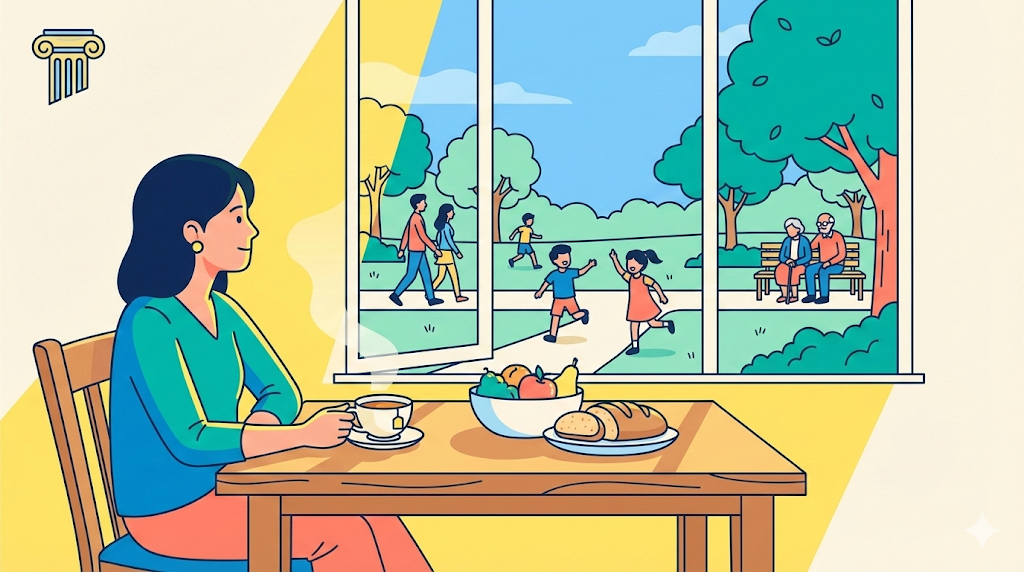
Hana decides to test a smaller weekend plan. She chooses one “people thing” and one “quiet thing.” On Saturday, she meets a friend at a local market, buys simple food, and walks home. On Sunday, she sleeps a little more, cooks lunch, and takes a long bath. Her phone stays in another room for one hour. She does not post. She just feels her own pace.
Weekends are a mirror. They show what we miss in weekdays: sleep, family, nature, or community. Around the world, people solve this in different ways—active rest or quiet rest, busy markets or quiet Sundays. The deeper question is not “Which weekend is best?” It is “Which weekend helps you return to life with a clearer mind and a kinder heart?”
Key Points
- Modern weekends can become stressful because of consumer and digital pressure.
- Free time is unequal, so rest is easier for some people than others.
- Healthier weekends often mix connection, quiet time, and simpler plans.
Words to Know
burnout /ˈbɝːnaʊt/ (n) — extreme tiredness from long stress
consumer /kənˈsuːmər/ (adj) — related to buying and spending
digital /ˈdɪdʒɪtəl/ (adj) — related to phones and the internet
attention /əˈtenʃən/ (n) — focus of the mind
inequality /ˌɪnɪˈkwɑːləti/ (n) — unfair difference between people
commute /kəˈmjuːt/ (n) — travel to and from work
luxury /ˈlʌkʃəri/ (n) — something not everyone can have
overload /ˈoʊvərˌloʊd/ (n) — too much to handle
well-being /ˌwel ˈbiːɪŋ/ (n) — feeling healthy and okay in life
flexible /ˈfleksəbəl/ (adj) — able to change easily
protect /prəˈtekt/ (v) — keep safe
experiment /ɪkˈsperɪmənt/ (n) — a test of a new idea
mirror /ˈmɪrər/ (n) — something that shows the truth